

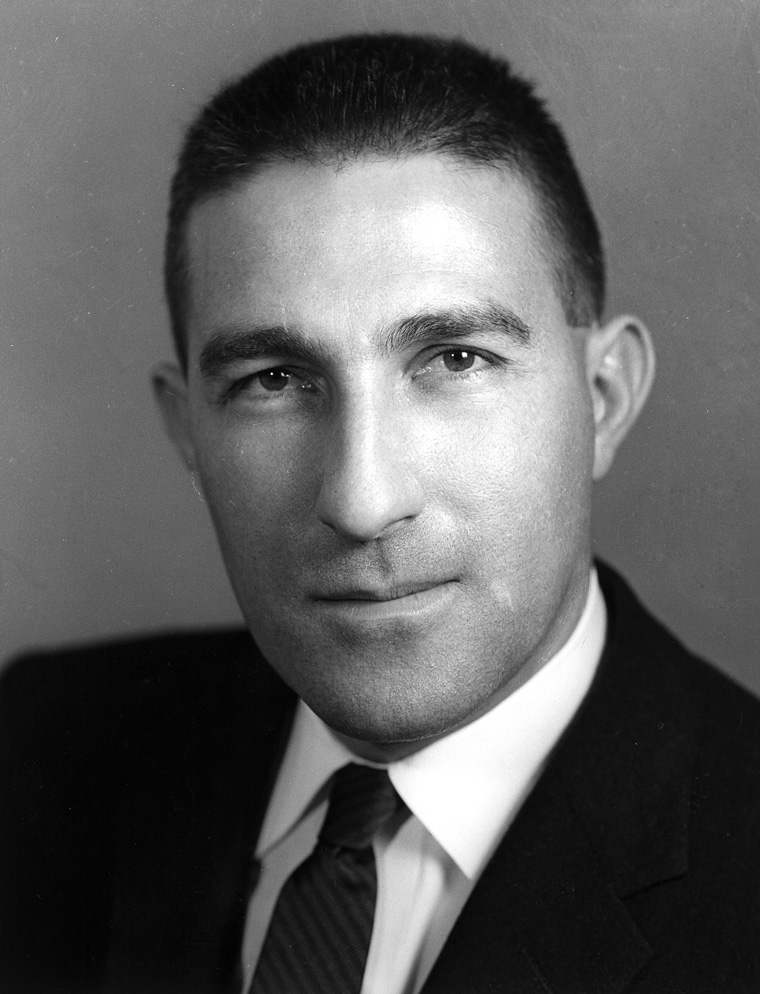
Stewart Udall
In Part 1 we looked at the life of Stewart Udall, an unconventional Mormon who left orthodoxy, but still acted with principle and conscience. His written statement of the reasons he could not remain in full fellowship as a Mormon is very thought provoking – even today. This post will start an examination of a defining moment in the intersection between the life of Mr. Udall and the Mormon Faith. It centered around the question of race in LDS theology and practice.
Background
 In the 1960’s Stewart Udall was one of the most visible Mormon government officials. He had served 3 terms as a U.S. congressman representing his home state of Arizona and in 1961, newly elected President John F Kennedy selected Udall to sit in his cabinet as Secretary of the Interior. After the death of Kennedy Udall continued to serve under President Johnson.
We discussed in a prior post how Udall diverged from the church in his attitude towards black people – rejecting the notion of a curse and advocating racial equality in civil rights. Remember that he had worked to desegregate the cafeteria at the University at Arizona, even before the law required it. He had also joined the NAACP. Despite this track record, his affiliation with the Mormon church raised questions for Stewart while acting as Secretary of the Interior.
Comments received
One such question arose while he was in the very act of advancing civil rights. Early in his time as Secretary of the Interior Udall played a direct role in integrating the last segregated football team in the NFL:
The fields are white…
“The Redskins — the last team in any major professional sport to integrate — were set to begin playing in a new stadium (which Mr. Udall later named for Robert F. Kennedy) that sat on land owned by the National Park Service. In March 1961, Mr. Udall sent a sharply worded letter to Redskins owner George Preston Marshall, warning him that he was in danger of criminal prosecution if the team violated anti-discrimination laws. In 1962, Bobby Mitchell became the first black player to take the field for the Redskins.”
(“Stewart L. Udall, 90, interior secretary …” washingtonpost.com)

Udall’s letter to Marshall made national headlines and it was over this issue that he received a letter from a Mormon branch president in Georgia which pointed out a contradiction:
“Now as a member of the most segregated organization on earth, how can you tell a man who to hire on a ball club? Is it Constitutional? Please don’t be victimized by the seed of Cain.”
(Letter to Stewart Udall, March 28, 1961 archive.org)
 In addition to Mormons questioning his commitment to Mormonism in view of his actions on civil rights, there were non-mormon black people who questioned his commitment to civil rights in view of his status as Mormon. In Sept of 1961 Udall received a note and related letter from the editor of the Washington AfroAmerican. A reader of that newspaper sent a letter to the editor which asked:
“I would be willing to gamble that Secretary of Interior Udall advertises big and acts mighty small about how much he hates discrimination. Mr. Udall is said to be a Mormon, holding a profound antipathy toward our Colored Race.
How many Negroes does Secretary Udall have on his team (or personal staff)? I’ll wager he has exactly the same number GS-15(or higher) positions in the Secretary’s office at Interior as Prince George County has on their school board.
For equality sake why not get an answer?”
(Letter to editor, Sept 11, 1961 archive.org)
The editor passed on that letter with his own stating:
Chuck Sumner Stone Jr. Tuskegee Airman, Editor.
“We don’t believe that a man’s religion determines to any appreciable extend his feeling toward Negroes, but it is generally believed in America that Mormons are anti-Negro. However, we eventually intend to get some “answers” about the Department of Interior and the extent to which Negroes are working and being promoted to higher grades”
(C. Sumner Stone to Stewart Udall, 12 Sept 1961, archive.org)

It’s clear that any Mormon holding public office in the 1960’s would face greater scrutiny because of the Churches continued discrimination.
Memo to the First Presidency

Stewart Udall, David O McKay and Hugh B Brown
Just a few days after receiving these last few letters, Udall forwarded all 3 letters to the First Presidency of the church with a note expressing concern about the increasing scrutiny that church members are facing because of the priesthood ban.
“I am deeply concerned over the growing criticism of our Church with regard to the issues of racial equality and the rights of minority groups. My immediate concern has been elicited by such things as the three letters which I am enclosing and the casual comments, but of greater importance have been the inquiries and comments which from time to time have been directed to me personally by leaders who of prominence in our Nation’s Capital.
Unquestionably, the sensitivity of the American people on this question is deepening. It is my judgment that unless something is done to clarify the official position of the Church these sentiments will become more intense and vocal, and sooner or later I fear they will become the subject of widespread public comment and controversy.
Under the circumstances –and in a spirit of humility- -I felt that I should convey my concern to you. I strongly feel that this deserves your wise attention, and I stand ready to give assistance or counsel if such should be in order.
Sincerely,
Stewart L. Udall
Secretary of the Interior”
(Stewart Udall to First Presidency, 18 Sept 1961, archive.org)
The Presidency Responds
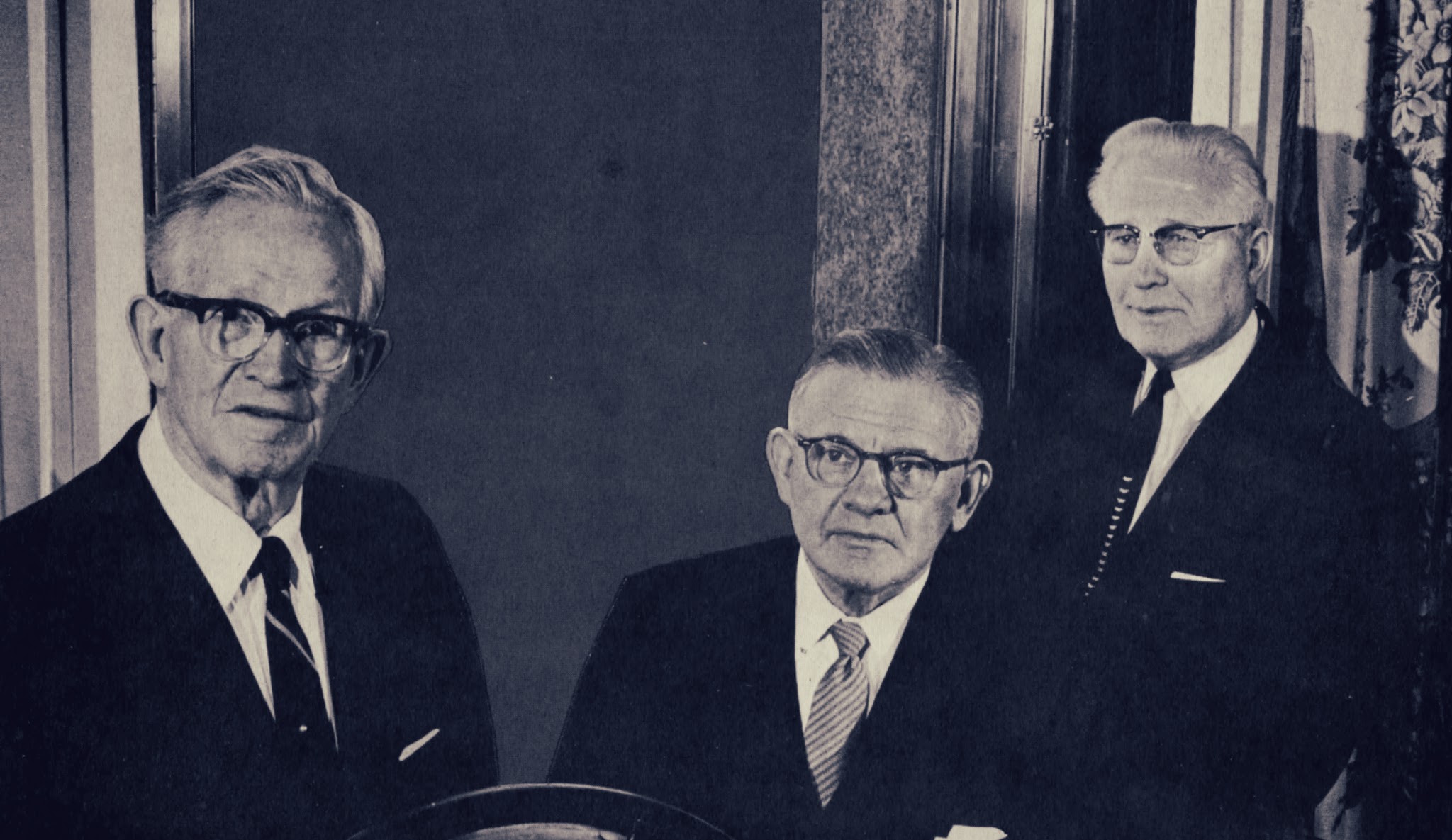
First Presidency, McKay, Moyle and Brown
A response was promptly received from the First Presidency. You can see the original signed letter here. I encourage you to read it first and come to your own conclusions. What they had to say is worth reviewing. After acknowledging his letter and the importance of the question, the response began:
“We hasten to assure you that this is a matter which has received the closest, the wisest and, we hope, the most inspired attention of which the brethren are capable.
In considering this question in the past, practically every president of the Church has made some statement in reference thereto. When we read the three letters which you enclosed to President McKay, his immediate comment was, “We admit negroes to the Church by baptism, but we do not let them receive the Priesthood.”
We have always felt that we could do more for the Negro than any other church. We know that through baptism the door to the celestial kingdom of God is opened.”
(First Presidency to Stewart Udall, 27 Sept 1961, archive.org)

Related blogpost
This start seems promising at first. If you have the limited view that the priesthood ban simply means that you don’t get the priesthood, then you might think that the above statement is sufficient. I refer you to the post “I too have been born of goodly parents” so that you can see the the ban had much deeper and significant impact in the lives of black men and women. From that more complete perspective the opening statement is woefully short-sighted. The letter continues:
In 1949 the First Presidency, after discussion with the Council of the Twelve, wrote the following:
First Presidency 1949
“The attitude of the Church with reference to negroes remains as it has always stood. It is not a matter of the declaration of a policy but of direct commandment from the Lord, on which is founded the doctrine of the Church from the days of its organization, to the effect that negroes may become members of the Church but that they are not entitled to the priesthood at the present time. The prophets of the Lord have made several statements as to the operation of the principle. President Brigham Young said: ‘Why are so many of the inhabitants of the earth cursed with a skin of blackness? It comes in consequence of their fathers rejecting the power of the holy priesthood, and the law of God.They will go down to death. And when all the rest of the children have received their blessings in the holy priesthood, then that curse will be removed from the seed of Cain, and they will then come up and possess the priesthood, and receive all the blessings which we are now entitled to. President Wilford Woodruff made the following statement: The Day will come when all that race will be redeemed and possess all the blessings which we now have.
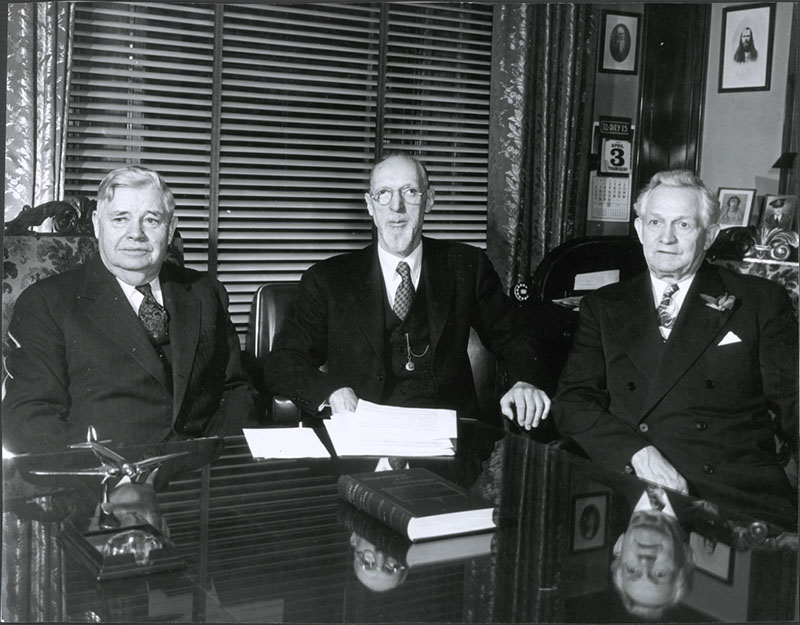

Guess which level applies to racism
Keep in mind that this is the highest level of Church Authority instructing the highest ranking Mormon in US Government on Church doctrine. In the past people have quibbled over whether the priesthood ban was policy or doctrine. Here the First Presidency is stating unequivocally that it is neither. In this above section, the Brethren state that the priesthood ban is a direct commandment from the Lord. If God’s commandments are the foundation of Doctrine which is then the basis of policy – then the priesthood ban was part of the most fundamental basis of the Church. It is conceded that it may one day be lifted, but is given the highest level of sanction possible at the time.
The letter continues with the remainder of the 1949 statement:
Pre-Mortal Life: Spirits less valiant came to earth black?
“The position of the Church regarding the negro may be understood when another doctrine of the Church is kept in mind, namely, that the conduct of spirits in the pre-mortal existence has some determining effect upon the conditions and circumstances under which these spirits take on mortality, and that while the details of this principle have not been made known, the principle itself indicates that the coming to this earth and taking on mortality is a privilege that is given to those who maintained their first estate; and that the worth of the privilege is so great that spirits are willing to come to earth and take on bodies no matter what the handicap may be as to the kind of bodies they are to secure; and that among the handicaps failure of the right to enjoy in mortality the blessings of the priesthood, is a handicap which spirits are willing to assume in order that they might come to earth. Under this principle there is no injustice whatsoever involved in this deprivation as to the holding of the priesthood by the negroes. “
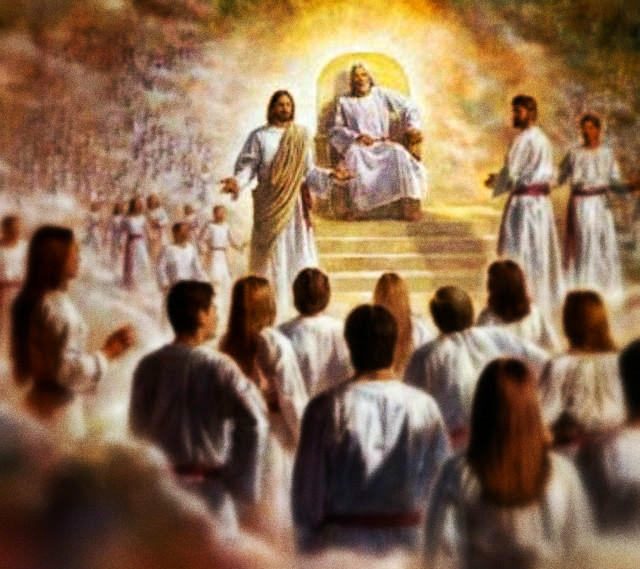
 While the prior section described the reality and origin of the ban, this section describes the reason for the ban. The First Presidency here is describing some of the ideas that were declared false and disavowed in the “Race and the Priesthood” Gospel Topic essay on LDS.org. The fact that they are teaching false concepts as the doctrine of the church is one reason that people have difficulty reconciling the words of the Prophets with that essay.
The idea that less valiant spirits in the pre-mortal life were punished by receiving less than optimal bodies and living conditions through race or handicap is one of the most insidious and pernicious vile doctrines that have ever darkened the pulpits of Mormonism. It gave divine sanction for people to harbor racism in their hearts and show it with their words and actions because they believed that those people were simply getting justice for their past less valiant choices. I have written about this before in “Mormon Handicaps.”

Related blogpost
One reason that this false teaching was so attractive is that it seemed to help make sense of the world. Since Mormons believe that God is a being of perfect justice, then it didn’t make sense that some people would be born in lower stations than others – by race or nationality or physical handicap. By making those things a deserved disadvantage in this life resulting from pre-mortal sin, it restores the notion of perfect divine justice. I wrote about the evolution of this thinking in the blog post “The Mormon Ring of Power: The First Estate”
The letter continues:
There are several other statements that have been made and letters written upon the subject. We thought it might be of interest to you to have a letter written to a prominent educator in July of 1947, from which we quote the entire substance:
Lowry Nelson – Previously wrote to the First Presidency
“We might make this initial remark: the social side of the Restored Gospel is only an incident of it; it is not the end thereof.
“The basic element of your ideas and concepts seems to be that all God’s children stand in equal positions before Him in all things.
“Your knowledge of the Gospel will indicate to you that this is contrary to the very fundamentals of God’s dealings with Israel dating from the time of His promise to Abraham regarding Abraham’s seed and their position vis-a-vis God Himself. Indeed, some of God’s children were assigned to superior positions before the world was formed. We are aware that some higher critics do not accept this, but the Church does.
“Your position seems to lose sight of the revelations of the Lord touching the preexistence of our spirits, the rebellion in heaven, and the doctrines that our birth into this life and the advantages under which we may be born, have a relationship in the life heretofore.
“From the days of the Prophet Joseph even until now, it has been the doctrine of the Church, never questioned by any of the Church leaders, that the Negroes are not entitled to the full blessings of the Gospel.
“Furthermore, your ideas, as we understand them, appear to contemplate the intermarriage of the Negro and White races, a concept which has heretofore been most repugnant to most normal -minded people from the ancient patriarchs till now. God’s rule for Israel, His chosen people, has been endogamous. Modern Israel has been similarly directed.
“We are not unmindful of the fact that there is a growing tendency, particularly among some educators, as it manifests itself in this area, toward the breaking down of race barriers in the matter of intermarriage between whites and blacks, but it does not have the sanction of the Church and is contrary to Church doctrine. “
You will see that President McKay’s remarks at the moment are in keeping with the statements of his predecessors.

Here the First Presidency is quoting the response that was given to LDS sociologist Lowry Nelson when he previously wrote to them on that matter. Nelson responded to each of the above points with a rebuttal that was rejected by the Prophet at that time, but is now accepted as fact. See “The Lowry Nelson Exchange” for the full details – particularly the section titled “Dr. Nelson’s Bold Reply to the Prophet” in which he rebuts these points.

Related Post. Click here for more
Having past prophets reject truth given to them by members while holding on to now disavowed, false teachings handed down to them from prior Prophets is one reason why people are having a hard time accepting that church leaders have any special connection to God or any ability to discern truth. The same thing is true of the response given to Sewart Udall in this letter.
The letter continues:
Now, so far as the Tooele situation is concerned, we must leave it entirely to the community of Tooele. Whether they welcome the Negro, lend him money, or what they do, is their responsibility. The fact is that we do not welcome negroes into social affairs, because if we did, it would lead to intermarriage, and we do not favor intermarriage. We recommend that negroes marry negroes, and that whites marry whites, and we cannot modify this statement. We recommend that Japanese marry Japanese, and that Hawaiians marry Hawaiians. The cross between the Hawaiian and the Chinese makes a good citizen, and we do not oppose it, but we look with disfavor upon negroes marrying whites, for their own happiness. The only reason we object to their social participation is because that inevitably will lead to intermarriage, and we cannot change that until the Lord gives a revelation otherwise.
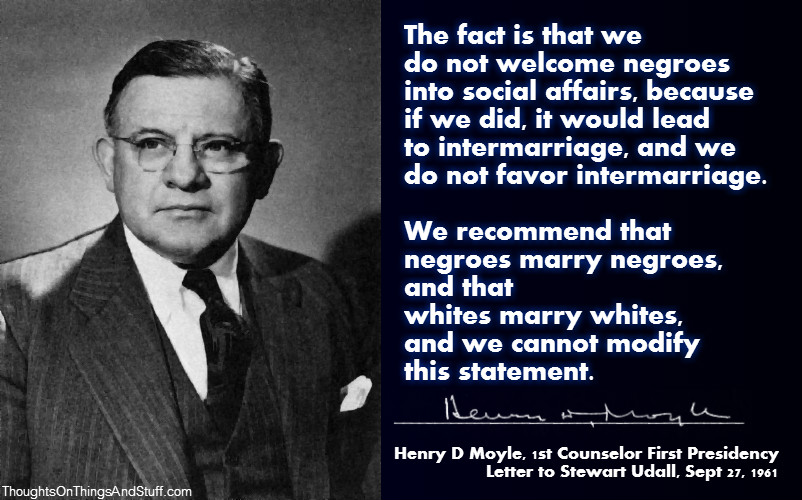 Tooele was a nearby community 35 miles southwest of Salt Lake City that had seen remarkable growth and an influx of non-LDS people from many different nationalities and cultures – including black families. ((see this excellent review of the “M-Factors in Tooele’s History” utah.edu)) Mining and Military installations had drawn in laborers and personnel from many walks of life. The First Presidency makes the point that regardless of how blacks are received in nearby communities – for the part of Mormons, social segregation and anti-miscegenation are inextricably linked and the church endorsed rule.

Why are there so dang many opportunities for me to reuse this image?
Clearly, this policy of anti-miscegenation has roots in Mormon scripture.
The letter continues:
The Church maintains that all citizens are, under the Constitution of the United States, as it has been amended, entitled to all the freedom and to all the liberties guaranteed by the Constitution. Negroes who are converted to the principles of the restored gospel, as promulgated by the Church, are entitled to membership in the Church, upon being properly baptized, and, except for the holding of the Priesthood, are entitled to the blessings and privileges otherwise granted members of the Church. You no doubt are aware of the fact that the Prophet Joseph Smith was against slavery and that the anti-slavery beliefs of the Church under Joseph Smith are credited by some as being one of the chief causes of their troubles in Missouri and the terrible persecutions which were endured by our people in that state. Furthermore, the Prophet announced that if he had the power he would free all the slaves, and, curiously, his plan was to buy the slaves their freedom.

related blogpost
The idea that Mormons were anti slavery and this caused them difficulties in Missouri is often repeated as a testimony of the progressive and enlightened position of the church since it’s founding. A close inspection of the events at that time in church history reveals that while the Church did initially publish what would appear to be an invitation for free slaves to join their community, they spent much more time attempting to disavow that notion and prove to their non-lds neighbors that they did not oppose slavery. One example is a letter that Joseph caused to be published which provided scriptural justification for slavery. This letter was the subject of a prior post “Joseph Smith vs. The Abolitionists” and was also used by Apostle Delbert Stapley to prove to Gov. George Romney that Joseph did not support equal rights for black people, which was the subject of the post “George Romney and the Delbert Stapley Letter” ((See an excellent review of this history in Chapter 3 of “Neither White Nor Black” by Bush and Mauss at SignatureBooks.com))

related blogpost
Another example is seen in a declaration of belief made shortly after leaving Missouri now recorded in the Doctrine and Covenants:
“We believe it just to preach the gospel to the nations of the earth, and warn the righteous to save themselves from the corruption of the world; but we do not believe it right to interfere with bond-servants, neither preach the gospel to, nor baptize them contrary to the will and wish of their masters, nor to meddle with or influence them in the least to cause them to be dissatisfied with their situations in this life, thereby jeopardizing the lives of men; such interference we believe to be unlawful and unjust, and dangerous to the peace of every government allowing human beings to be held in servitude.”
(Doctrine and Covenants Section 134:12 lds.org)

Here Joseph and the leaders of the early church are specifically stating that it is a greater injustice to teach the gospel to black men and support their freedom than it is to keep them as slaves. These are not anti-slavery sentiments.
Joseph’s plan to free the slaves, articulated during his 1844 presidential campaign, was a calculated and politically savvy compromise which appealed to northerners desiring an end to slavery and southerners concerned about property rights. It was based on the idea that slavery was scripturally justified, and approved by God, but was an undesirable arrangement. This position was also taken by Brigham Young. ((“I will remark with regard to slavery, inasmuch as we believe in the Bible, inasmuch as we believe in the ordinances of God, in the Priesthood and order and decrees of God, we must believe in slavery. This colored race have been subjected to severe curses, which they have in their families and their classes and in their various capacities brought upon themselves. And until the curse is removed by Him who placed it upon them, they must suffer under its consequences; I am not authorized to remove it. I am a firm believer in slavery.”
– Address to Utah Legislature, Brigham Young, 23 Jan 1852, lds.org and archive.org)) Ardent abolitionists viewed scripture differently and saw that since no man can possess the title or deed to another, then there is no compensation that can be justified for the “purchase” of a man’s freedom. ((See the first abolitionist pamphlet from 1700 “The Selling of Joseph” archive.org))
The First Presidency concludes:
J Reuben Clark
We are in entire accord with a statement President Clark once made:
“I have the deepest and most profound sympathy for the position of the negro, which, looked at from an earthly point of view, is perhaps not explainable, but neither is the position of the Indian nor the Australian bushman; however, as you may or may not know, there are, in our philosophy, some principles which may account for these mortal inequalities.“

By describing the “negro” “indian” and “bushman” in these terms, the First Presidency is taking a position of racial superiority – the idea that white people are superior in certain characteristics, traits, and attributes than other races and so those races should be pitied. What are the principles of Mormon philosophy that they refer to which may explain mortal inequalities of the races? These are best summarized by the words of Apostle Mark E Petersen:
Mark E Petersen
“With all this in mind, can we account in any other way for the birth of some of the children of God in darkest Africa, or in floodridden China, or among the starving hordes of India, while some of the rest of us are born here in the United States? We cannot escape the conclusion that because of performance in our preexistence some of us are born as Chinese, some as Japanese, some as Indians, some as Negroes, some as Americans, some as Latter-day Saints. These are rewards and punishments, fully in harmony with His established policy in dealing with sinners and saints, rewarding all according to their deeds”
(Mark E. Petersen, “Race Problems as they Affect the Church,” August 27, 1954, p. 11 archive.org)

 The only way in which all these other races and nationalities may be considered “punishments” is with the idea that white Americans are superior. This toxic idea of racial superiority presents a conflict with the notion of a fair God and so the concept of race as a punishment for pre-mortal performance is invoked to harmonize God and justice.
It makes a sort of sick sense from the twisted perspective of using religious dogma as justification for white supremacy. As we see in this letter, such ideas persisted at the highest levels of Church authority even into the mid 20th century.
The letter then concludes:
The likelihood of moving into Tooele a large group of negro families has been brought to our attention previously by our mutual friend Eugene Merrill. We do not anticipate any trouble. We have good leadership in the two stakes in Tooele and believe that both from a church and a civic standpoint that the community will adapt itself to whatever circumstances and conditions may arise.
Thanking you very kindly for your interest once again, we are
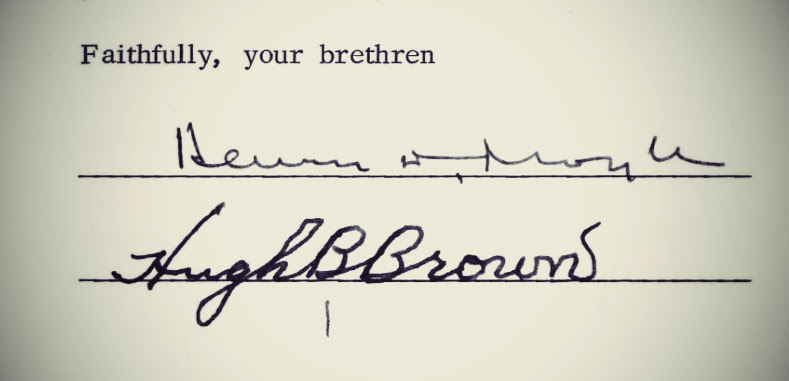
Remember that Tooele had seen rapid diverse growth related to mining and military industries. This would draw a more racially diverse element than typically seen in Utah. Earlier in this letter the First Presidency established that segregation was the rule for the church in mixed societies. (“The fact is that we do not welcome negroes into social affairs, because if we did, it would lead to intermarriage, and we do not favor intermarriage.”) With that in mind, it makes sense that the LDS Stakes would adapt to any changes in the racial composition of the community – by segregation.
adaptation by segregation
Conclusion
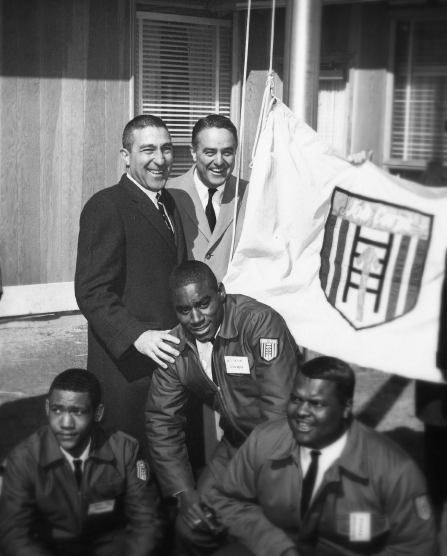 Stewart Udall was a “Jack Mormon” with a conscience. He acknowledge truth within his heart about the worth of all men – black or white – despite what the Church had taught on the matter. Like Lowry Nelson in 1947, he wrote to the source to see if there was any hope for new light on this issue.
Nelson’s communication with the First Presidency represented a leader in academic sociology confronting the racism of Mormon doctrine and practice. Udall’s communication came from the world of civic government. In both instances, the reply was unequivocal: racial superiority, religious white supremacy and anti-miscegenation were as much Mormon doctrine as the atonement itself – a “direct commandment from the Lord”.
Remember that after the Prophet rejected Lowry Nelson’s scriptural and sociological arguments for racial equality, Nelson wrote to a national publication to bring attention to the issue and push for change. Nelson was a lowly academic sociologist. Stewart Udall was the highest ranking Mormon political figure in the nation who sat in the Cabinet of the President of the United States. If Udall were to make a public appeal in much the same way that Lowry Nelson did – how much greater would the impact be?
Next
It turns out that this is exactly what Stewart Udall did. In our next post, we will examine Secretary Udall’s “Appeal for Full Fellowship for the Negro” a letter he wrote to the editor of Dialogue Magazine and see what he had to say.

With anticipation for Part Three.
Your blog is my favorite Mormon themed blog! Man, every time I see a new article, it blows my mind. As a side note, how can I verify that these letters are genuine?
Thanks for the positive feedback! You can go to the University of Arizona Udall paper collection and checkout the documents to see them yourself.
Do you know where I can get a solid reference on Henry D Moyle’s quote about people marrying among their own race?
That is taken from the letter that is signed by both Moyle and Brown. Brown is known to have been in possession of more enlightened views on race (which made him unpopular at the time) – the letter at archive.org is linked above in the essay.
You can find the quote in question here:
https://archive.org/stream/StewartUdallConscienceOfAJackMormon/StuartUdall-OpenLetterOnRaceAndConsequencesOfConscience#page/n14/mode/1up