

[toc]A year ago I proposed that readers identify and submit examples of “vicious lies” that were told by William Law and other authors of the Nauvoo Expositor – A newspaper published by Mormon defectors and critics which was subsequently ordered destroyed by the Nauvoo City Council under direction of Mayor Joseph Smith. The destruction of the Expositor set off a chain of events culminating in the murder of Joseph Smith at the hands of a mob. While the question of whether the Expositor contained “vicious lies” still remains the subject of controversy, there are fascinating aspects of the response to the Expositor which have not received great attention.
This post is the first in a series that will explore aspects of how Joseph Smith and his allies in church and government responded to the accusations and revelations contained in the Expositor. In particular we will examine the composition of the body of the Nauvoo City Council and the various potential conflicts of interest and allegiance which had the potential to affect the outcome of their deliberation.
Not a helpless lamb
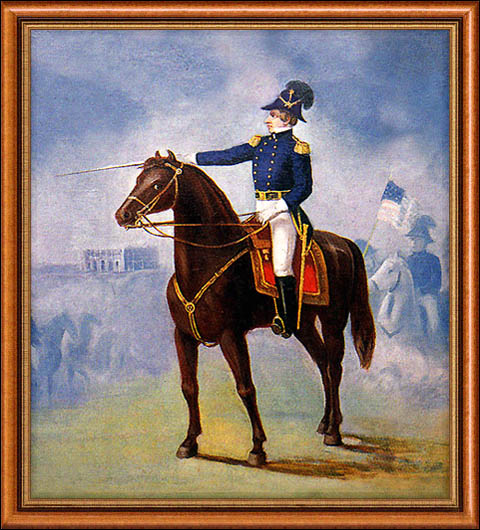
Joseph was no defenseless lamb
Regardless of whether the statements in the Expositor were true or not, Joseph Smith and the other leaders of the church understandably saw the paper as injurious to their reputation in the region. William Law and a small group of men were using the power of the press to challenge the most powerful religious and political forces in the city of Nauvoo. The residents of Nauvoo could open up the pages of the Expositor and read the most shocking accusations against the Mayor/General/Prophet/President and his close confidants. From a public relations perspective, the Expositor had claimed control of the narrative leaving Joseph and his allies in a defensive position.
Joseph was at the top of the hierarchy of political, military and religious forces in Nauvoo. He was no stranger to adversity and had become adept at exercising the tremendous influence he held in each of these realms to protect his interests . It should have been no surprise that Joseph and his colleagues had resources of their own to equally work upon the minds of the public eager for material to inform their opinions of events. Since Joseph was mayor and as a result ran the City Council meetings and his cousin managed the Mormon friendly paper, the Nauvoo Neighbor, the response to the accusations of the Expositor took place in the halls of government and in the pages of the Mormon friendly press.
As we will see over the next few posts, Joseph used the bully pulpit of his office and his influence over the city council and local newspaper to produce an effective counter assault upon the character of the publishers of the Expositor as well as a plausible if misguided legal justification for the destruction of the press.
Nauvoo City Council – Who were they?
First, it must be considered that Joseph did not have the option of acting alone as Mayor in responding to the disturbance caused by the publication of the Expositor. Any action he took had to be deliberated upon and approved by the governing body of the city council over which he presided. The content of their deliberations will be the subject of a future post – in this post we will examine the composition of the men of the Council.
The very next day after the publication of the first (and only) edition of the Nauvoo Expositor on June 7, 1844 the Nauvoo City Council was convened in regular session. The LDS church Primary Manual that pointed out the many vicious lies told by the Expositor also described the council stating:

Primary 5, Lesson 37 – “Joseph and Hyrum are martyred.” Excerpt regarding the City Council
Okay – it’s clear that the church wants to make the case that the deliberation was not biased because there were both members and non-members of the church on the council. But who exactly were the members of the Nauvoo City Council who met in deciding the response to the Expositor? Let’s take a look:
[table]
Name, Age, LDS, Calling, Council of 50, Anointed Quorum, Mason, Nauvoo Legion, Notes
Hyrum Smith, 44, Yes, Assistant President, Yes, Yes, Yes, Yes – Chaplain, Brother to Joseph
John Taylor, 35, Yes, Apostle, Yes, Yes, Yes, Yes – Judge Advocate,
George P Stiles, 27, Yes, ??, No, No, Yes, ??, Nauvoo City attorney
Aaron Johnson, 38, Yes, Seventy and Nauvoo High Councilor, No, No, Yes, Yes, Nauvoo Justice of the Peace and Joseph Smith bodyguard
William W Phelps, 52, Yes, High Priest, Yes, Yes, No, No,
Phineas Richards, 56, Yes, Nauvoo High Councilor, No, No, ??, Yes,
Benjamin Warrington, 34, No, -, -, -, No, Yes – Quartermaster Sergeant,
Edward Hunter, 51, Yes, ?? , No, No, Yes, Yes – herald and armor bearer, Joseph Smith bodyguard
Levi Richards, 45, Yes, High Priest, Yes, Yes, ??, No, Brother-in-Law to Joseph by plural wife Rhoda Richards
Sylvester Emmons, 36, No, -, -, -, No, No, Editor of the Nauvoo Expositor. Not present
Name, Age, LDS, Calling, Council of 50, Anointed Quorum, Mason, Nauvoo Legion, Notes
Orson Spencer, 42, Yes, Elder, Yes, Yes, No, No, Professor at University of Nauvoo
Daniel Wells, 30, No, -, -, -, No, Yes – commissary general, Not Present
Elias Smith, 40, Yes, Elder, Yes, No, No, No, Manager of Nauvoo Neighbor (pro-mormon newspaper); Cousin of Joseph Smith
George W Harris, 64, Yes, Nauvoo High Councilor, No, No, No, No,
Samuel Bennett, 34, Yes, Elder, No, No, No, Yes – Surgeon, Trustee of University of Nauvoo
Joseph Smith, 38, Yes, Prophet; President, Yes, Yes, Yes, Yes -Lt. General, Mayor of Nauvoo
[/table]
As you can see – the Council was heavily populated by high ranking church leaders. The tally is 13 Mormons and 3 non-Mormons on the council. There are several other important observations to be made from this table
Attendance
The above table lists all the current members of the Council. Who was actually present at the sessions on 8 and 10 June 1844, however? The Church History Library has scanned and made available the attendance record of the meeting which can be viewed here:

Attendance at Nauvoo City Council Meetings
Of the 3 men on the council who were not Mormon, Sylvester Emmons was not present, as he was the editor of the Expositor and Daniel Wells was not present for unknown reasons – leaving Benjamin Warrington as the only non-Mormon attending the sessions addressing the Nauvoo Expositor.
This means that in sessions discussing and voting on the fate of the Expositor, there was just a single non-mormon on the council. The remainder of the 13 members of the Council were subordinate to Joseph through the Church, and one of three secret societies outside the halls of government.
Secret Societies
In addition to general membership in the church, there were a number of secret societies in Nauvoo – each of which bound it’s members by oaths of allegiance. In addition to being Mayor and President of the church, Joseph was also at the top of each of these secret societies. What may not be apparent by simply tallying the names of the men of the council is the degree to which many of them are subordinate to or in allegiance with Joseph in these secret organizations.
Council of Fifty
Council of Fifty
The Council of Fifty was a secret organization composed primarily of high level church members and a few influential non-members. Serving as a model for a theocracy with Joseph at the head, the council was established as “a working demonstration of the principles and pattern for a future kingdom of God on earth.” (Encyclopedia of Mormonism) The members were bound by oath to secrecy regarding the council. Joseph Smith was the President of the council and had been elevated by the council as a King on 11 April 1844.
” In this council was prest. Joseph chosen as our prophet Priest, & King by Hosannas.”
(William Clayton Diaries, 1 January 1845, BOAP.org)
The accusations of mixing the influence of church and state included in the Expositor were primarily centered around the existence and activities of the Council of Fifty. Read more about the Council here and here.
Of the 14 members of the Nauvoo City Council, 7 were also secret members of the Council of Fifty.
Anointed Quorum
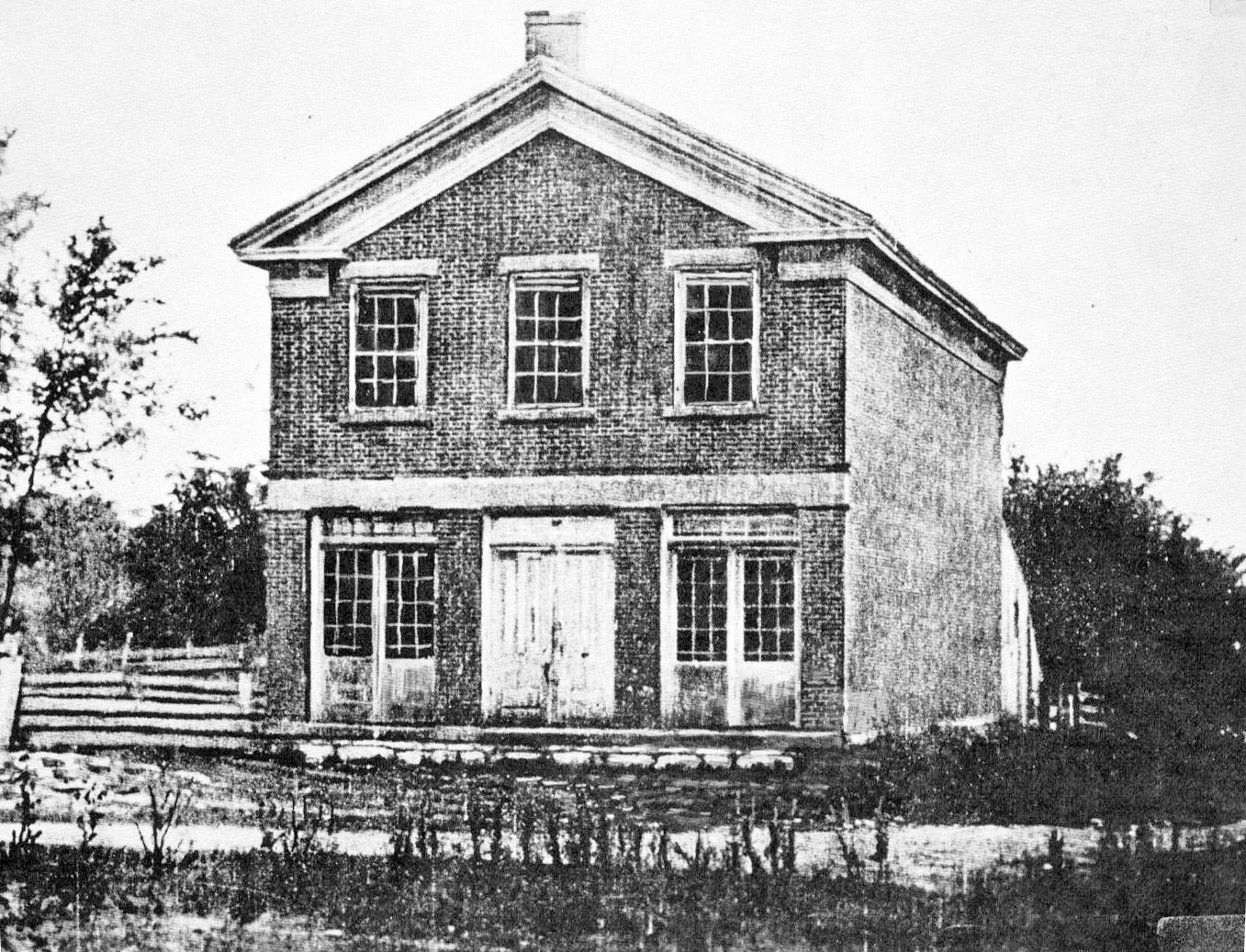
Joseph Smith’s red brick store. Endowments were introduced in the upper room.
On 4 May 1842, Joseph had introduced the temple endowment ceremony in the room above his red brick store in Nauvoo. The members who received this ceremony were inducted into what was referred to as the “Anointed Quorum” and were bound by oath with penalty of death to keep its secrets and to work to build up the church.
” Within the context of these gospel instructions, the initiates made covenants of personal virtue and benevolence and of commitment to the church. They agreed to devote their talents and means to spread the gospel, to strengthen the church, and to prepare the earth for the return of Jesus Christ.”
(Glen M. Leonard, Nauvoo: A Place of Peace, A People of Promise (Salt Lake City: Deseret Book, 2002), 258-59)
Mormons today who have been through the modern temple ceremony will be familiar with these oaths. Mormons who attended the temple prior to 1990 will also remember the penalties that were apart of those promises, but have since been removed from the ceremony. On 28 September 1843 Joseph “was by common consent and unanimous voice chosen President of the quorum and anointed and ord[ained] to the highest and holiest order of the priesthood” ((Faulring, An American Prophet’s Record, 416)). While the activities of the quorum during its meetings dealt primarily with theological issues, the oath taken by each member as part of the endowment ceremony bound them to do everything in their power to defend and build up the church. With Joseph at the head of both the Church and the Quorum – it also meant protecting their prophet and president.
Learn more about the Anointed Quorum in Nauvoo here.
Of the 14 members of the Nauvoo City Council, 6 were also members of the Anointed Quorum.
Nauvoo Freemasons
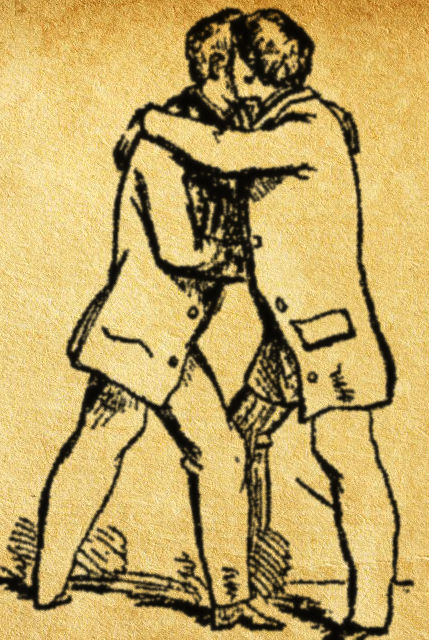
Masonic embrace of the five points of fellowship
On 15 March, 1842, Joseph acted as chaplain for the installation of the Nauvoo Lodge of Freemasons. That evening and the next day saw Joseph elevated to the sublime degree of Master Mason – a procedure which normally takes anywhere between 3 months to 3 years. ((History of the Church, Vol 4, pg 550. BYU.edu)) Joseph’s rapid elevation to the sublime degree was considered the first instance of “making a mason at sight” to take place in Illinois. ((“Freemasonry and Nauvoo”, Carr, Page 13, archive.org)).
As part of the oaths and ceremony of the order, Freemasons commit to support and defend each other – particularly those who hold the rank of master mason. This is articulated in the portion of their ceremony called the “five points of fellowship”:
“Master then makes the following explanation respecting the five points of fellowship:
Master to candidate. “Brother, foot to foot teaches you that you should, whenever asked, go on a brother’s errand, if within the length of your cable-tow, even if you should have to go barefoot and bareheaded. Knee to knee, that you should always remember a Master Mason in your devotions to Almighty God. Breast to breast, that you should keep the Master Mason’s secrets, when given to you in charge as such, as secure and inviolable in your breast as they were in his own before communicated to you. Hand to back, that you should support a Master Mason behind his back as before his face. Mouth to ear, that you should support his good name as well behind his back as before his face.”
(“Illustrations of Freemasonry”, William Morgan, 1827, pg 76, archive.org)
Learn more about Freemasonry in Nauvoo here.
Of the 14 members of the Nauvoo City Council, 6 were Freemasons.
Nauvoo Legion
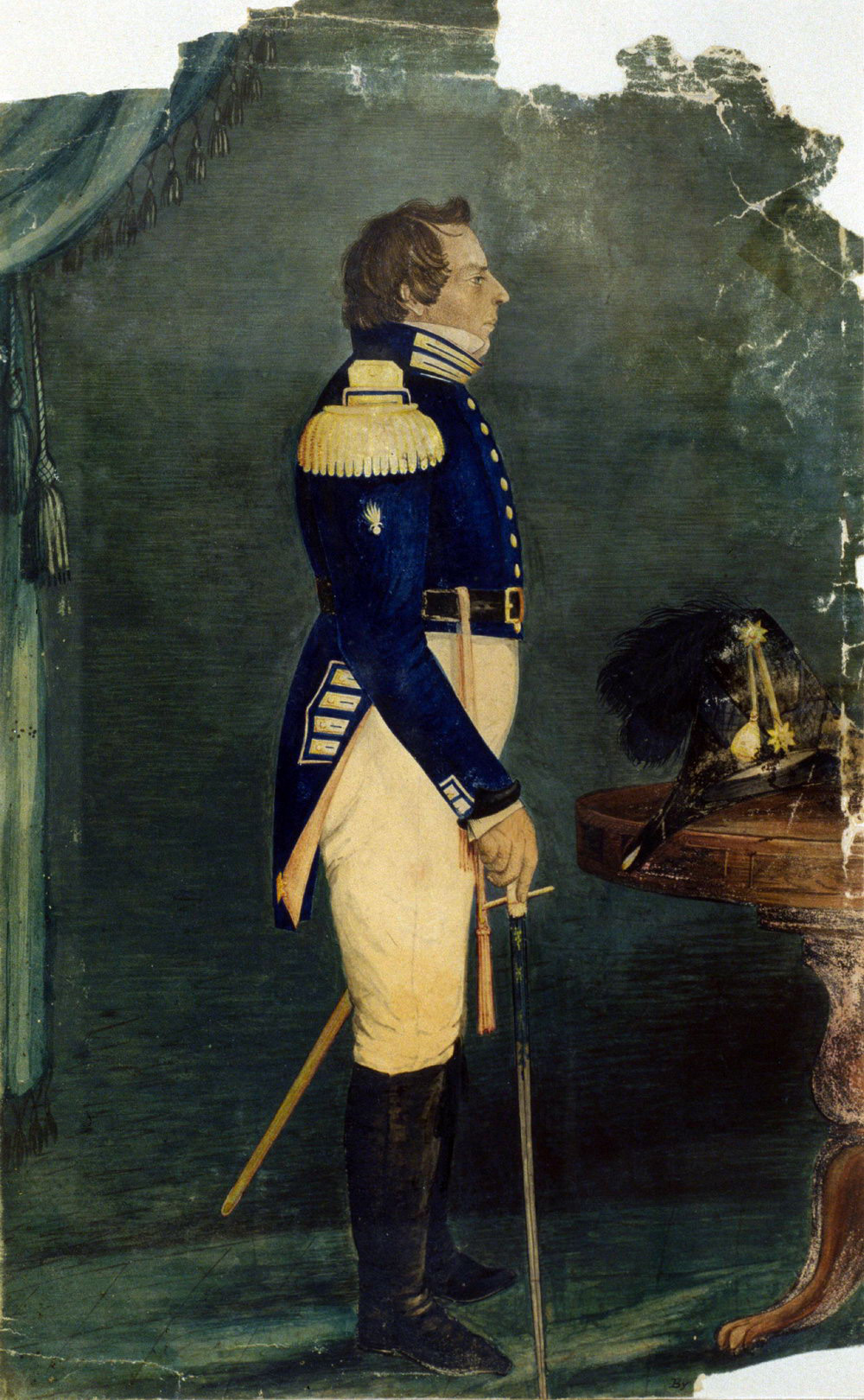
Lt. General Joseph Smith.
The Nauvoo Legion was the state authorized militia provided for by the Nauvoo city charter. Joseph Smith held the highest rank in the legion – Lieutenant General. As such, all other officers and militia members were subordinate to him in the militia. The court martial of the Nauvoo Legion gave Joseph, as mayor and Lt. General, the authority to call to military service, levy fines and enforce local law. While Joseph acted in capacity as Mayor during the city council meetings, it would not escape the minds of those on the council that they served at a rank and privilege (or lack there of) at Joseph’s discretion in the military hierarchy.
Read the Court Martial of the Nauvoo Legion as published in the LDS Times and Seasons here.
Of the 14 members of the Nauvoo City Council, 9 were active in the Nauvoo Legion (though all citizens between 18 and 45 years of age could be called up to military service in the Legion)
Family Relationships
Joseph was related to 3 members of the city council. Hyrum Smith was his older brother. Elias Smith was his cousin. Levi Richards was his brother-in-law by secret polygamous marriage to Rhoda Richards. It goes without saying that being related to someone who is at the center of a controversy over which a government body is taking action is an obvious conflict of interest. Members of the council related to Joseph can not be said to be unbiased and impartial when the issue at hand is a newspaper that made such accusations against the man.
Summary
Any of those auxiliary characteristics of the members of the city council described above would be considered significant conflicts of interest in a deliberation applying modern standards of governmental ethics – Family relations, being subject to religious authority, subordinate positions in secret societies, secret oaths of allegiance and support and subordinate military rank.
It is possible to add up the number of conflicts for each member of the council. For example – Hyrum Smith was 1) named in the Expositor, 2) a member of the church subordinate to Joseph as prophet and president, 3) Joseph’s Brother, 4) a member of the Council of Fifty under Joseph as King, 5) a member of the Anointed Quorum with Joseph as president under secret oath to defend the church, 6) a Freemason under secret oath to support Joseph as master mason, and 7) Chaplain in the Nauvoo Legion subject to military authority of Joseph as Lt. General. That is a total of 7 conflicts of interest, any one of which should have compelled Hyrum to recuse himself from any deliberation over an issue related to accusations made about himself and Joseph, such as the Expositor affair. Contrast that with Benjamin Warrington who, as the only non-member, only had one conflict in that he was subordinate to Joseph in the Nauvoo Legion.
Here is a tally of the conflicts of interest for each council members:
[table]
Name, Number of conflicts
Hyrum Smith, 7
John Taylor, 5
George P Stiles, 2
Aaron Johnson, 4
William W Phelps, 3
Phineas Richards, 2
Benjamin Warrington, 1
Edward Hunter, 4
Levi Richards, 4
Orson Spencer, 3
Elias Smith, 3
George W Harris, 1
Samuel Bennett, 2
Joseph Smith, 7
[/table]
Defenders of Joseph will likely argue that modern standards of ethics should not be applied to this government body in the 1800’s. The fact of the matter is that modern standards of ethics have evolved to respond to the unavoidable bias which is inherent when a member of government has such close ties to any subject that is the focus of official government action. Modern standards of ethics responded to preexisting problems – they didn’t create the problems. The bias and conflicts of interest were present in the Nauvoo City Council, and arguably led to an outcome which was not based on sound legal principles and notions of justice.
Conclusion
When you hear defenders of the church make the argument that the Nauvoo City Council was a balanced mix of members and non-members who came to a thoughtful solution to the threat of mob violence invoked by the Nauvoo Expositor – don’t believe it for a minute. The Nauvoo City council was composed overwhelmingly of men who were subordinate to Joseph Smith through many layers of conflicts of interest and there was only one non-member in that group (wait till you see how the vote went). This state of affairs left no doubt that the outcome of the deliberations of the Council would be exactly what Joseph intended from the start – the destruction of the Expositor and the silencing of its publishers.
In the posts that follow in this series we will explore other aspects of the steps that were taken to discredit the Expositor and see how adept Joseph was at using the Mormon friendly press to counter the accusations levied by William Law and his colleagues.

Great article and I am looking forward to others in this series.
You’ve done a commendable job here. Just to add to your list of Freemasons, Levi Richards was made a Master Mason on 1/3/1844; Elias Smith on 3/22/1844; and Samuel Bennett on 7/21/1842. Of those on the Council who weren’t Masons, three were the non-members (and I haven’t actually checked to see if they weren’t Masons–they just weren’t Mormon Masons.) Two additional members, W.W. Phelps and George W. Harris were renounced Masons. They left the Fraternity before they joined the Church, over the Morgan affair, and would not have been eligible to rejoin in Nauvoo.
Cheryl – thanks for the update! Can you provide the source of documentation for those 3 being masons? I was not able to find them in the minutes of the Nauvoo Lodge.
Turns out George Harris was possibly a cohusband with Joseph in a polyandrous marriage with Lucinda Morgan Harris. He had housed Joseph for a time prior to Navoo and was personally invited to Navoo.