

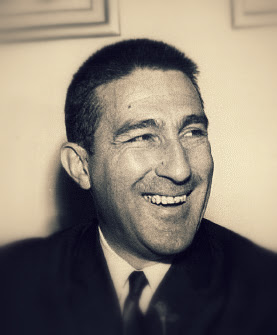
Stewart Udall
In Part 1 we examined a statement of conscience that “Jack Mormon” Stewart Udall wrote for himself as he made the deliberate decision to distance himself from fellowship among the Mormon faithful. Among the reasons that he listed was that many of the members were empowered to be “lovers of their fellowmen in public and Negrophobes in private.” Udall felt strongly about racial equality – working to end segregation alongside black activists.
In Part 2 we saw that after being appointed as one of the closest advisers to President John F Kennedy, Udall was repeatedly confronted about his status as a Mormon and the racist teachings and policies of the church. He took it upon himself in 1961 to write a memo to the First Presidency of the church expressing concern over the scrutiny and public criticism which the church would continue to attract over the policy. The reply that he received from the First Presidency reinforced that the concepts of racial superiority, religious white supremacy and anti-miscegenation were at the core of Mormon doctrine regarding black members.
Like Lowry Nelson a decade before, Stewart Udall decided to write an open letter to promote change on a policy that he believed was wrong and hurt both the church and its members. As the highest ranking national Mormon political figure, his appeal would attract a great deal of media attention, much of which would be embarrassing for the church. In this post, we will examine the contents of that letter and the supportive feedback he received.
Interval Events

Related blogpost
In the years that followed his initial communication with the First Presidency in 1961, several important events occurred. George Romney had become governor of Michigan, overcoming criticism for his status as a Mormon in view of his civil rights record (despite private chastisement by Apostle Delbert Stapley). The Civil Rights bill of 1964 was passed and the church had met with the NAACP and made a strong public statement in support of civil rights during one of it’s general conferences. (See the blogpost on “Jeff Nye: Memo From a Mormon” for details about this NAACP meeting) Despite this, no new revelation on race was forthcoming and the priesthood ban remained.

Cover of 1st Issue of Dialogue
In 1967 Udall determined that he could use his position to encourage a change. He decided to take his appeal to the public in the form of an open letter. “Dialogue: A Journal of Mormon Thought” was a new independent LDS publication that had just been launched in 1966 and he chose Dialogue as the venue for his letter. As the national Secretary of the Interior his letter would have been given a prominent position in any secular publication, but it appears that Udall wanted the discussion to be one targeted to members of the church primarily.
On the eve of the letters publication, he sent a copy of it and a note to David O McKay, then Prophet of the LDS Church, stating:
Dear President McKay:
For many years the question of the status of the Negro in our church has been for me (and, I suspect, for many other Latter-Day Saints as well) an agonizing issue. The hopeful events of recent years — most notably the visible enlargement of human brotherhood, and the spread of the ecumenical spirit among the religions of the world — have served to heighten my own concern over this question.
I have, at last, decided to speak out on this subject. The essay enclosed will appear in public print in the next few days as a letter-to-the-editor in the next issue of DIALOGUE Magazine. I want you to personally know that I have expressed myself with humility and utter honesty — and always with the prayerful thought that my action will, in the long run, help, not harm, the church.
Most sincerely,
Stewart L. Udall
Secretary of the Interior(Stewart Udall to David O McKay, 16 May 1967, archive.org)
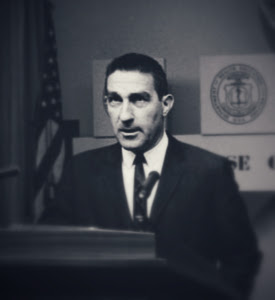
Udall also forwarded copies of the letter to various friends as well as George Romney, another prominent LDS politician, and both LDS apostles from his home state – Spencer W Kimball and Delbert Stapley. Udall meant to be heard.
The Letter

Dialogue, Summer 1967
On May 18 the letter was published in the 1967 summer issue of Dialogue. You can find that issue at the Marriott Library digital archives here as well as a more accessible format on archive.org. I encourage you to read the letter and form your own opinions.
Let’s examine the content of the letter
Introduction
For more than a decade we Americans have been caught up in a revolution in thinking about race and human relationships. The Supreme Court has wisely and effectively related the Constitution to the facts of life in the twentieth century; three Presidents and five Congresses have laid new foundations for a society of equal opportunity; most of the churches, with unaccustomed and admirable militance, have enlisted foursquare in the fight for equal rights and higher human dignity.
The whole future of the human race is now keyed to equality — to the ideal of equal opportunity and of equal civil rights and responsibilities, and to the new dignity and freedom which these would bring. The brotherhood of all men is a moral imperative that no religion and no church can evade or ignore. Enlightened men everywhere see now, as their greatest prophets and moral teachers saw long ago, that brotherhood is universal and indivisible.
Udall begins by noting that in the wider world outside of Mormonism, there have been significant changes in the attitudes and understanding about race and universal brotherhood. In the halls of government this included the supreme court which had struck down the state sponsored segregation of Jim Crow laws through numerous rulings such as Brown v Board of Education to the past Presidents and congresses which enacted the Civil Rights Bill of 1964 and the Voting Rights Act of 1965.


Furthermore, Udall points out that most churches had come to the elevated position of supporting racial equality. He correctly observes that this principle is one that “no church can evade or ignore.” This is particularly true because as men everywhere are enlightened with this knowledge, any church that has not met the standard of universal brotherhood will stand apart like a misshapen creature cowering in the dark shadows of the past.
The state of Mormon doctrine
Stewart goes on to address the contrast between society and the church on this issue:
It was inevitable that national attention would be focused on what critics have called the “anti-Negro doctrine” of the L.D.S. Church. As the Church becomes increasingly an object of national interest, this attention is certain to intensify, for the divine curse concept which is so commonly held among our people runs counter to the great stream of modern religious and social thought.
We Mormons cannot escape persistent, painful inquiries into the sources and grounds of this belief. Nor can we exculpate ourselves and our Church from justified condemnation by the rationalization that we support the Constitution, believe that all men are brothers, and favor equal rights for all citizens.
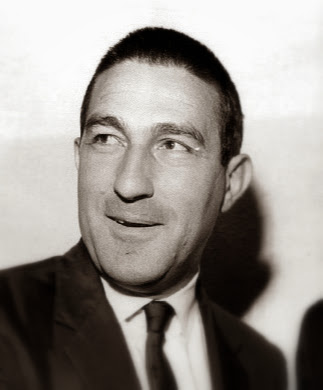 Udall wastes little time in getting to the heart of the matter. He makes several bold statements here which call out those aspects of Mormon doctrine which are out of step with the ideals of universal brotherhood. By stating that the “divine curse concept” is counter to modern religious and social thought Udall is warning that both the wider religious world and the secular world have surpassed the Mormon church in moral standing on this issue. He observes that members are under greater scrutiny because of this disparity.

Hugh B. Brown delivered the 1963 statement on civil rights. The ban remained for 15 more years. click for text.
Udall particularly calls out the church for hypocrisy. To this point, any time the church has been questioned about its racist policies the church has pointed out that it fully supports civil rights legislation and constitutional law, usually pointing inquirers to the 1963 general conference statement on civil rights. The church then separates the issue by stating that their policies of withholding priesthood from black men within the church are completely unrelated. Udall calls the church out on this double standard by stating that public condemnation of the church is “justified” and that this rationalization is illegitimate.
These are strong words coming a very visible and highly placed Mormon in a very public forum.
What is needed
Udall goes on to explain what is needed to remedy the situation:
This issue must be resolved — and resolved not by pious moralistic platitudes but by clear and explicit pronouncements and decisions that come to grips with the imperious truths of the contemporary world. It must be resolved not because we desire to conform, or because we want to atone for an affront to a whole race. It must be resolved because we are wrong and it is past the time when we should have seen the right. A failure to act here is sure to demean our faith, damage the minds and morals of our youth, and undermine the integrity of our Christian ethic.
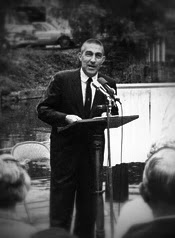
In prescribing what the resolution of this disparity should be, Udall shows that he understands the full depth of harm that such racist teachings can do. Doctrine has consequences. The ideas of a “divine curse” or skin color reflecting pre-mortal unrighteousness, once planted in the minds of Mormons, give rise to religiously sanctioned attitudes and behaviors towards others which are not worthy of the Christian injunction to love your neighbor. As such, a simple change of policy would be insufficient. Those teachings must actively and explicitly be named and disavowed – because they are wrong.
Step back and consider that a “Jack Mormon” in a highly visible political position is writing an open letter to the Prophets and Apostles, declaring that what they are teaching about race is FALSE and WRONG. This is not a meek plea at the foot of authority – it is a shot across their bow. As we will see in a subsequent post, a lay Mormon making such statements publicly has consequences. It should not escape your notice that history has vindicated Udall. It took over 50 years, but in 2013 the Church finally did disavow those false teachings in the “Race in the Priesthood” essay published on the church website.
All are hurt
Udall next goes on to describe how all are damaged by toxic racist ideas:
In her book, Killers of the Dream, the late Lillian Smith — whose life was exposed to all the warping forces of a racist culture — wrote these words:
I began to understand slowly at first, but more clearly as the years passed, that the warped, distorted frame we have put around every Negro child from birth is around every white child also. Each is on a different side of the frame but each is pinioned there. And I knew that what cruelly shapes and cripples the personality of one is as cruelly shaping and crippling the personality of the other.
My fear is that the very character of Mormonism is being distorted and crippled by adherence to a belief and practice that denies the oneness of mankind. We violate the rights and dignity of our Negro brothers, and for this we bear a measure of guilt; but surely we harm ourselves even more.

Lillian Smith
Lillian Smith was a white, southern author who boldly challenged the notions of racial superiority and segregation in her works of fiction and non-fiction. She spoke out on such issues decades before the civil rights movement when it was considered unacceptable to do so. This video will give you a brief glimpse into the profound impact of her work. The quote Udall selected was from her 1949 book “Killers of the Dream” – a collection of memories and observations that became one of the most influential works leading up to the civil rights movement of the 1960’s.
 Udall reflects that the same distorting effect which Smith describes from the racist south also are seen in Mormon culture. Remember in his own statement of conscience that he saw that many members were “Negrophobes in private.” He was very familiar with the corrupting effects of false doctrine upon the hearts of his Mormon brothers and sisters. He unequivocally describes the Mormon doctrine and policy as a violation of “the rights and dignity of our Negro brothers” and again calls out the false error of it by acknowledging that the church is guilty for it.
Stewart Udall’s letter is nothing short of a rebuke.
A diverted past
Udall then points out that things weren’t always this way:
What a sad irony it is that a once outcast people, tempered for nearly a century in the fires of persecution, are one of the last to remove a burden from the most persecuted people ever to live on this continent. The irony is deepened by the circumstance of history that the present practice of the Church in denying full fellowship to the Negro grew out of troubles rooted in earlier pro-Negro policies and actions. It is well known that Joseph Smith held high ideals of universal brotherhood and had strong pro-Negro leanings that were, in a true sense, prophetic. And it is well known that in the beginning the Church accepted Negroes into full fellowship until this practice offended its anti-Negro neighbors. It then settled for a compromise with its own ideals based on a borrowed superstition that the Negroes are under a divine curse. This anomaly is underscored by the fact that the Church has always enjoyed excellent relations and complete fellowship with all other races. (How different have been our associations with the American Indians, the Spanish-speaking peoples, the Japanese and Polynesians!) What transformations might take place in our spiritual and moral energies if we were to become, once again, moral leaders in improving the lot of the Negroes as we have striven to do with the natives of the South Seas?
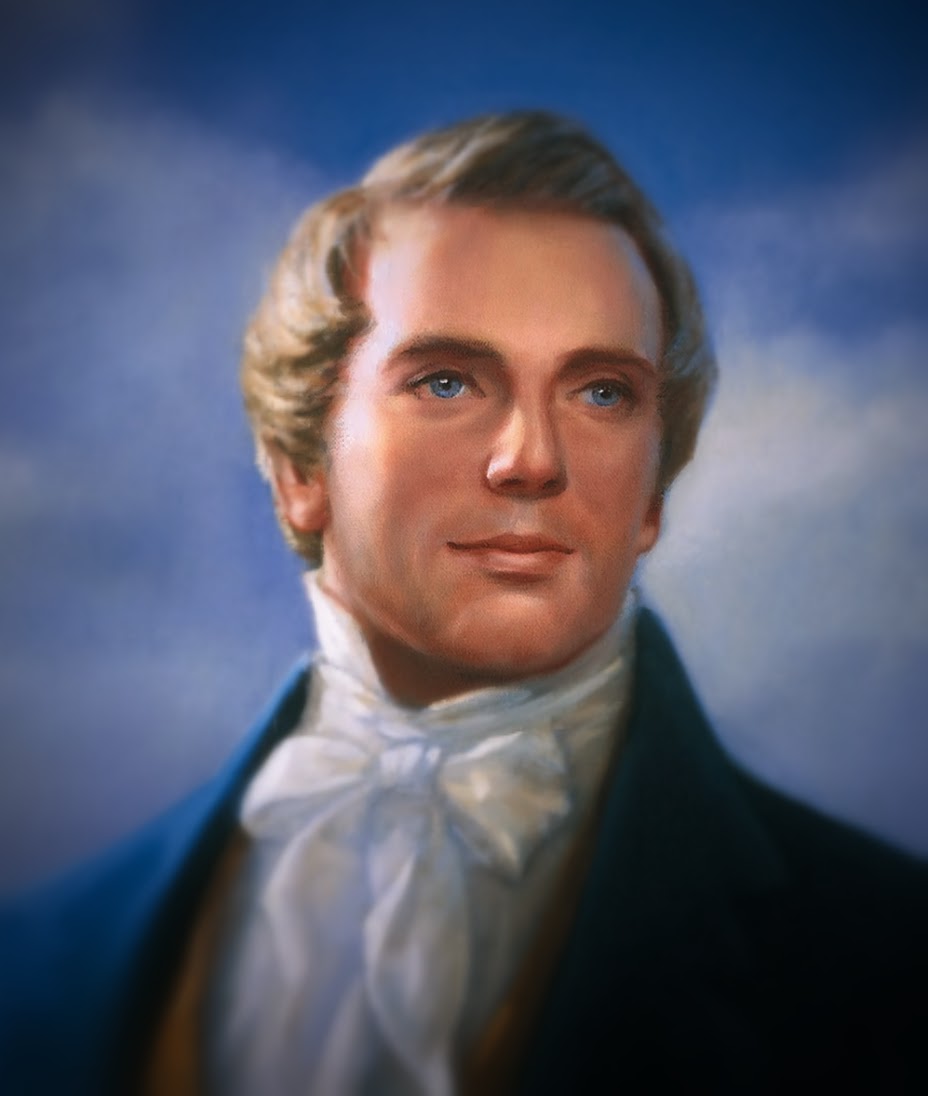 Udall demonstrates that he is an astute scholar of Mormon history. He concisely describes the initial position of the church on race relations and the subsequent changes ((For an excellent over of the evolution of Mormon race doctrine see chapter 3 in “Neither Black nor White” by Bush and Mauss, Signature Books)) that were made after outside pressure was applied. ((Udall doesn’t mention that while it was Joseph who initially took a liberal stance regarding blacks, it was also Joseph which shifted towards religious segregation, divinely justified slavery and white supremacy. See “Joseph Smith vs The Abolotionists“)) By reclaiming that prophetic heritage, Udall argues, Mormons could stay true to their origins and once again take a moral lead in the world.
 A statement that Udall makes in this section will be the focus of many of the responses he received. He calls the concept of a divine curse a “borrowed superstition.” It is true that the concept of the black skin being the result of a divine curse significantly pre-dated the Church. It was used by slavery apologists to give biblical sanction to the slave trade. ((See book review of Noah’s Curse: The Biblical Justification of American Slavery at byu.edu)) If that were the end of the story, then Udall’s statement that the idea was “Borrowed” could be taken legitimately. However, the fact that Mormon scripture specifically endorses skin color relating to a divine curse (See “Racism in the Book of Mormon?“) and perpetuates the ideas of the curse of Cain and Ham (See Moses 7:22 and Abraham 1:21-24) leaves Udall’s letter open to criticism that the divine curse was not borrowed, but a fundamental part of LDS cannon. As you will see in a subsequent post – those criticisms did come.
A precedent for change
Udall next points out that the church has changed significant aspects in the past.
President Wilford Woodruff ended the public, official practice of polygamy.
At an earlier impasse, the Church, unable to escape history, wisely abandoned the deeply imbedded practice of plural marriage and thereby resolved a crisis of its own conscience and courageously faced the moral judgment of the American people. In 1890 for most Church leaders polygamy was a precious principle — a practice that lay at the very heart of Mormonism. Its proscription took genuine courage, but our leaders were equal to the task. By comparison, the restriction now imposed on Negro fellowship is a social and institutional practice having no real sanction in essential Mormon thought. It is clearly contradictory to our most cherished spiritual and moral ideals.

People defending that priesthood ban frequently say that it would have been disastrous for the Church to promote racial equality in its early years because society was not ready to accept it. What is usually not mentioned is that society was far less ready to accept polygamy than it was racial equality. Udall makes the point here that the Church was ultimately able to expunge polygamy from its core of practices and that exercise was an important precedent.
How much easier should it be to move towards greater brotherhood when there is far less doctrinal foundation for racism than there was for polygamy. The minds and hearts of the modern Saints would be much more receptive to a move away from racism than the early Saints were in the move towards polygamy. In each case, they had been prepared to “follow the prophet” and so the change would be accepted.
Final appeal
Stewart ends his letter:
Every Mormon knows that his Church teaches that the day will come when the Negro will be given full fellowship. Surely that day has come. All around us the Negro is proving his worth when accepted into the society of free men. All around us are the signs that he needs and must have a genuine brotherhood with Mormons, Catholics, Methodists, and Jews. Surely God is speaking to us now, telling us that the time is here.
“The glory of God is intelligence” has long been a profound Mormon teaching. We must give it new meaning now, for the glory of intelligence is that the wise men and women of each generation dream new dreams and rise to forge broader bonds of human brotherhood. To what more noble accomplishment could we of this generation aspire?
Stewart L. Udall
Washington, D. C.
After making several bold confrontational statements, Udall ends with a reminder that the Saints have always been told that the status of the ban was temporary. He concludes by connecting this enlightened consciousness of universal brotherhood with the highest ideals of Mormon reverence and ask a question that is certain to resonate in the hearts of his audience.
Initial Reaction
If Udall’s goal was to prompt introspection and change in the hearts of the lay and leadership of Mormonism, his letter was a bombshell and could scarcely be ignored.
The Press

“A demand that the Mormon church immediately remove all restrictions on Negro members has been made by Stewart L Udall, Secretary of the Interior”
(New York Times, 19 May, 1967, Page 1, archive.org)“Interior Secretary Steward L. Udall, a member of the Church of Jesus Christ of Latter-Day Saints, has challenged his church’s doctrine of the “divine curse” of Negroes.”
(Lubbock Avalanche-Journal, 19 May 1967, Fri, Page 29, newspapers.com)“A demand that his church resolve its Negro Issue has been made by Stewart L. Udall, Secretary of the interior, a lifelong Mormon…”
( Southern Illinoisan, 23 May 1967, Tue, Page 4, Newspapers.com)“Interior Secretary Stewart L. Udall, a member of the Mormon Church, has urged his faith to renounce its discrimination against Negroes “because we are wrong””
(Nevada State Journal, 20 May 1967, Sat, Page 1, newspapers.com)“Stewart Udall, a Mormon, Demands that Church Clear Up Negro Issue”
(The San Bernardino County Sun, 25 May 1967, Thu, Page 26, Newspapers.com)“Arizona’s Stewart Udall gave his fellow Mormons and the ruling hierarchy of the Church of Jesus Christ of Latter-Day Saints, quite a jolt when he called upon them to open wide the doors of the church to Negroes”
(Arizona Daily Star, 20 May, 1967, archive.org)“Behold a new prophet has appeared in the person of Interior Secretary Stewart L. Udall, who wrote an unsolicited letter to Dialogue…”
(California Intermountain News (Mormon specific paper), 25 May 1967, archive.org)
George Romney – Peter Priesthood vs Jack Mormon
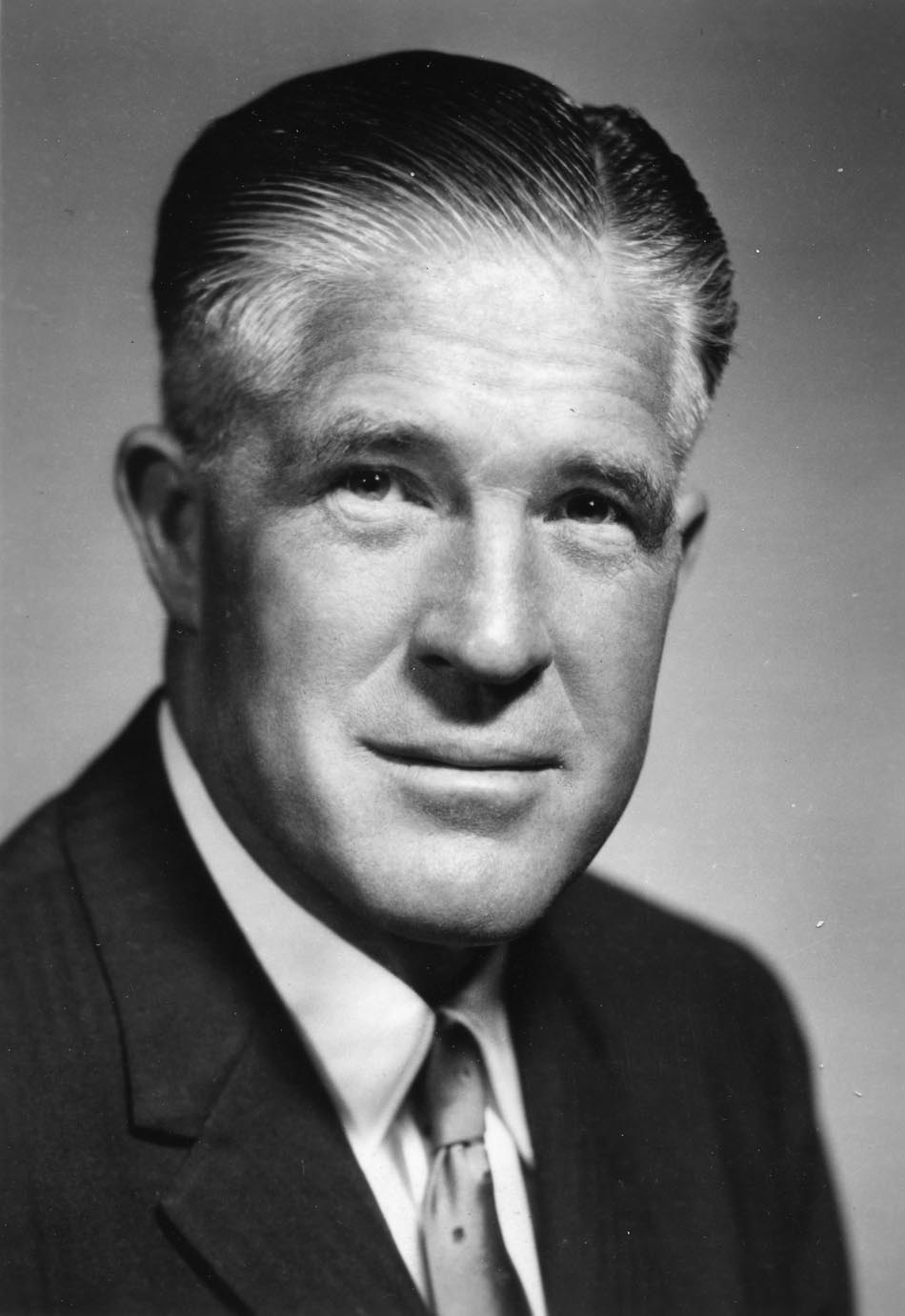
George Romney
Udall was not the only prominent LDS politician in 1967. The other major Mormon political figure of the time was George Romney, who had been elected Governor of Michigan in 1961 and was anticipated to be a front-runner Republican in a bid for the Presidency. Romney’s visibility is likely why Udall sent him an advance copy of the article prior to its publication. When questioned about his opinion on Udall’s letter, Romney drew a clear distinction between two camps in Mormondom – Peter Priesthood vs Jack Mormon.
“Ostensibly, Secretary Udall’s article in Dialogue and letter to President David O. McKay were written only as an expression of his viewpoint as a member of the church,” Romney said in a statement issued by his office. “In light of the fact that church doctrine is not determined by the attitude and expression of the individual members or the leadership, he knows as all other informed members of the faith that his method of accomplishing the religious objective he seeks cannot serve any useful religious service.”
Romney has insisted the Mormon doctrine should not be a factor in his political future because he did not draw it up and, under Mormon doctrine, has no role in trying to change it.”
( The Sunday Herald, 21 May 1967, Sun, Page 16, newspapers.com)
Romney’s position is one that is inline with the way that Mormon priesthood authority was meant to work – the leaders determine doctrine and make policy and the members toe the line. Any change that comes occurs from the top down – not from the bottom up. This was reflected in a letter published by a Mormon in response to Romney’s comments on Udall:
“When Romney said that Stewart Udall’s public letter demanding membership equality for Negroes in the Mormon Church could serve no useful religious purpose, he was speaking as an orthodox Mormon apalled at what he considered a flagrant violation of church rules by Udall. In the Mormon Church, guidance, believed to be inspired, always comes from the top it never originates from the membership.”
(Letter to the Editor, Samuel W Taylor, San Francisco Chronicle, archive.org)
Udall was a “Jack Mormon”. He wasn’t afraid to stand by his conscience when he knew something was wrong – even if it went against the religious dogma of the church. He risked ostracism from his fellow Mormons in doing so. Romney’s position was the epitomy of “Peter Priesthood.” You don’t raise objections. You don’t push for change. “Obey” is the first and only law. His fellow Mormons would respect him for it.
The Romney Paradox

A paper published at the time commented on the mixed positions:
“Yesterday, the Governor’s wife resigned from the Women’s City Club of Detroit because of charges that it has a discrimination policy against Negroes. At the same time, Romney’s own stand on civil rights became more clouded as he refused to endorse a demand by Stewart udall, Secretary of the Interior, that the Mormon Church remove all restrictions against Negro members.”
(Newsclipping, May 1967 archive.org)
The paradox of resigning from a women’s club which has racist policies, but then defending a church with racist policies was likely not a comfortable position for Romney to be in. To his credit, he did not let the racist doctrines of the church dictate how he treated black individuals in his business or government policies. See “George Romney and the Delbert Stapley letter” for more about Romney.
Positive Feedback
 A few people wrote to Dialogue in support of Udall’s appeal. “I hailed it as a welcome voice..” wrote one reader. ((see letters to the Editor, Dialogue, fall 1967. archive.org)) Still more individuals were so supportive of the appeal that Udall had published that they took the time to write to him and congratulate him on his sentiments and bravery.
One reader from Salt Lake City wrote:
“Your letter, or parts of it, to Dialogue came out in the Salt Lake Tribune this morning. Those of us, and there are many, who’ve been trying for years to make even a small dent in the church’s armor of discrimination and intolerance against the Negro rejoice that you’ve come out against bigotry and unchristian dogma. … Speaking frankly, too many of our people show too much of the “sheep-like” quality of blind follower ship and are over-anxious to conform, passing the responsibility to “The Brethren” for their spiritual and religious decisions. ”
(Positive Letter 1, “Stuart Udall and the Consequences of Conscience”, archive.org)
Lowry Nelson, who had communicated with the First Presidency 20 years earlier wrote:
“I’m Proud of You! … would that a little of your courage could get piped into the aenemic headquarters.”
(Lowry Nelson to Stewart Udall, 21 May 1967, archive.org)
Nelson also wrote a response letter to Dialogue stating:
“Let nobody doubt that Stewart Udall has spoken for thousands upon thousands of his concerned and thoughtful fellow churchmen. …The problem will not go away by being ignored. Decisions are urgently needed, for no reason other than the moral one to bring our principles of universal brotherhood into clearer view. There is, in my view, only one right — and righteous— answer.”
(Lowry Nelson to Editor, Dialogue, Fall 1967, archive.org)
A brief note from a supportive acquaintance in California read:
“Congratulations on your encouragement of our Mormon Leaders to come to grips with the inequality of Negroes in the Church. You are dead right –most of all we harm ourselves by continuing to maintain a posture of superiority.”
(Positive Letter 3, “Stuart Udall and the Consequences of Conscience”, archive.org)
Another reader from Utah wrote:
“I wish to congratulate you on your excellent and timely article dealing with the attitude of the Mormon Church on the negro problem… I agree wholeheartedly with your statement that the time has arrived when the Church should re-examine its doctrine, so long accepted by the great majority of its members, the doctrine that the negro is cursed with a black skin because of pre-existant sin on the part of the spirit which now inhabits his body. Not only must this doctrine be abandoned, but the entire concept of a connection between skin color and righteousness must be repudiated. To equate skin color with good and evil, as is done in the Book of Mormon, perverts all our thinking on the negro problem.”
(Positive Letter 4, “Stuart Udall and the Consequences of Conscience”, archive.org)
A sympathetic Elder from California wrote:
“I have been reading in the newspapers about your article in Dialogue Magazine on the Negro problem, and, as a fellow Latter Day Saint, just wanted to let you know that I agree with your views. It is true, as Governor Romney says, that the doctrine can only be changed thru revelation, but this fact (to my mind) only points up the further fact that we need new revelation. However, we cannot expect to receive any word from the Lord on this subject until we, as a people, are ready and willing to receive it. For, He will not force anything on us. So, articles such as yours are of value and do some good…. In any case, just wanted to let you know that you are not alone!”
(Positive Letter 7, “Stuart Udall and the Consequences of Conscience”, archive.org)
A Utah Attorney wrote:
“This is to congratulate you and commend you for your clear courageous statement in the current issue of “Dialogue” on the attitude of our Church on the Negro problem. …. Your statement has been long overdue and we are hopeful that it will have some effect on highest levels of Church authority. However we are not too sanguine that the “Revelation” ending this long-standing discrimination will result directly from what you have said.”
(Positive Letter 11, “Stuart Udall and the Consequences of Conscience”, archive.org)
An Official from the Ohio Dept. of Education wrote:
“Congratulations on your very forthright statement in Dialogue. It says so well what many of us believe so deeply. It is encouraging indeed to have such a statement from a person in high office, and to have it put in such eloquent words. I hope it is read and understood at 47 East South Temple.”
(Positive Letter 15, “Stuart Udall and the Consequences of Conscience”, archive.org)
These letters served to show Udall that he was not alone in his thinking. Society was emerging from the shadows of racism and many Church members were conflicted about how their own beloved church appeared to remain in the dark.
Conclusion
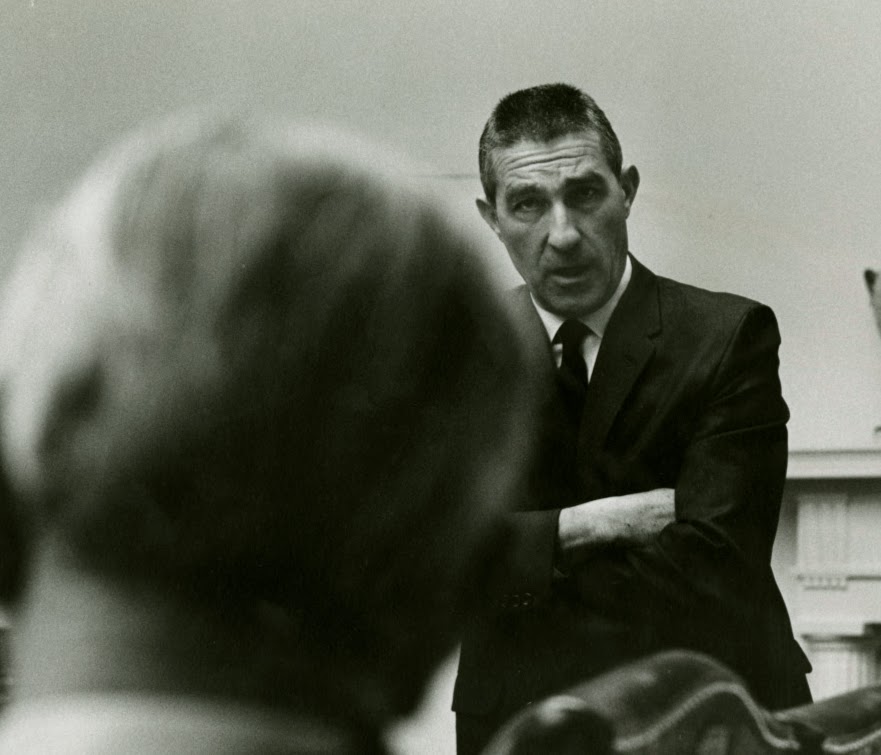
Udall makes his case to the President (LBJ)
Stewart Udall’s letter in Dialogue in 1967 was an unabashed appeal for the ancient dogma of hate to be excised from the heart of Mormonism. He didn’t cower before the robes of the men at the head of the church, but boldly called out those teachings which gave sanction to hate for what they were – WRONG. The fact that it took the church over a decade after Udall’s letter in order to change the racist policy is shameful. Adding to this embarrassment is the fact that it took another 46 years for the church to publicly disavow the idea of a divine curse in the 2013 “Race and the Priesthood” essay. The beauty of keeping your own conscience independent from the self-proclaimed moral authority of false teachers is that you, like Stewart Udall, are free to disavow hate and error in your own heart without waiting for those men blinded by their own power to give you permission.
Next
The responses that Udall received were not all positive. In fact, there were far more responses from faithful Mormons who disagreed with his letter. The next post in this sequence looks at the content of those replies and what they reveal about the heart of Mormonism in the 1960’s.

I can’t wait for the next installment!