

[toc]A few months ago I issued a challenge for anyone to point out something published in the Nauvoo Expositor which was a “vicious lie” in order to support a statement from the Primary 5 lesson manual that this publication contained “many vicious lies” about Joseph Smith and so justifying the destruction of the offending printing press (a tenuous assertion in and of its self).
I have already covered several submissions thought to be lies, which were actually substantiated by the historical record.
The submission
A reader named Seth submitted the following:
“It goes on to explain that women are brought from England for the sole purpose of being married to Joseph Smith against their will, combined with a lot of incendiary language. Of all the women who were sealed to Joseph Smith, none of them were converts from England, or anywhere in the Eastern hemisphere. There is no record, that I am aware of, of any women from England who were forced, against their will to marry Joseph Smith, or those who were threatened with death if they refused.” (see the original challenge article)
The extended full details of this accusation can be found in the preamble of the Expositor (see here). The key points are as follows:
- Women from far away countries have been induced to gather to the saints when they are converted to Mormonism
- Upon arrival a woman may be given to private interviews with Joseph and/or some of the twelve where she expects to receive a blessing or will of the Lord
- That woman is instructed in taking an oath of secrecy, on penalty of death.
- She is then told that God has revealed that polygamy has been restored and she should become Joseph’s spiritual wife.
- She is informed that she will have negative consequences if she rejects the proposal.
- The woman considers the situation she is in, after great sacrifice, far from home, under threat of d*mnation and ultimately is under great pressure to consent.
- Women who cannot so easily accept such a proposal may fall into the depths of depression, physical illness and death.
A great amount of detail is provided in the narrative that the Expositor’s author presents. After a bit of research I believe that the author has amalgamated the accounts of several women who had published their experiences of attempted inducement to marriage with Joseph or members of the twelve, Brigham Young in particular.
Overview
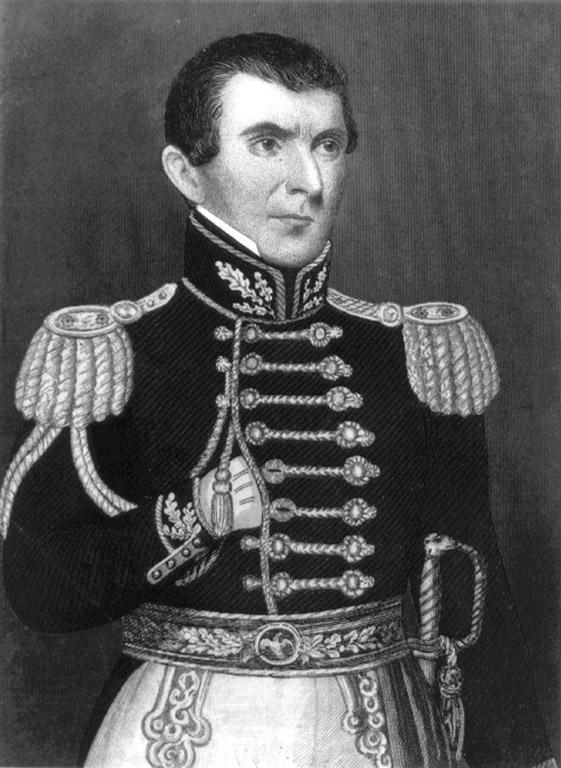
John C Bennett
Dissecting and analyzing this claim takes a bit more study than most. Here I will lay out, in summary what will be presented in more detail over 3 separate articles.
John C Bennett was a charismatic, cunning and intelligent convert to the church who quickly became a close confidant of Joseph Smith, was essential in creating and passing the charter of the city of Nauvoo, served for a time as Joseph’s assistant in the Church and was elected Nauvoo’s first mayor. While he and Joseph had become close friends, a division eventually formed between them when Bennett was accused of engaging in a system of spiritual wifery with several Nauvoo women.
Bennett had been accused of having sexual relations with several women under the notion that Joseph had taught a doctrine of “spiritual wives” allowing free intercourse, just so long as the relations were kept secret. The system that Bennett was accused of was different from the revelation on polygamy later revealed to the saints and recorded in D&C 132 in that no permission was required of the first wife, no sealing ceremony was performed and if a women was already married to a man, that marriage would continue after after the fact. [Note: Joseph Smith’s own secret plural marriages shared some of these features as well, once they were uncovered]
Bennett’s activities were made public and after a tumultuous disciplinary process he resigned in lieu of being disfellowshipped from the church. After Bennett departed from the church he committed to exposing Joseph Smith by writing a series of letters to the regional newspapers giving accounts of what he alleged to have witnessed as an insider in the top levels of the Mormon hierarchy. These letters were widely published and eventually assembled into the book “The History of the Saints: and Expose of Joe Smith and Mormonism” (archive.org)
In this book, among other accusations, Bennett gives an account of 3 women who were allegedly approached by Joseph Smith with proposals of plural marriage. In each instance the woman declined the proposal and then told others about the proposal, only to be accused of spreading lies about the prophet and having their own character disparaged.
The women were: Martha Brotherton, an 17 year old daughter of converts who immigrated from England. Nancy Rigdon, the 19 year old daughter of Joseph’s first counsellor Sidney Rigdon. Sarah Pratt, the wife of LDS apostle Orson Pratt who was away on a mission at the time of the proposal. The scenario depicted in the Expositor preamble, which is supposed to be a “vicious lie” is an amalgamation of these 3 women’s stories. If you read the accounts given by these women as published by John Bennett, you will find all of the details offered in the expositor.
Background
There are three accounts in particular, each of which have details that were reproduced in the amalgamated account depicted in the Expositor.
Martha Brotherton
 Martha Brotherton was the 18 year old daughter of converts from England who immigrated to Nauvoo to live among the saints. She wrote a letter describing an encounter with Joseph Smith and Brigham Young which was published local news papers (see Quincy Whig 06 August 1842, pg 2) and in John C Bennett’s expose. In this interview, Martha states that Brigham Young disclosed that Joseph had had a revelation allowing polygamy and then Young proposed that she become his plural wife. Joseph Smith then endorsed this proposal and reassured her that if she didn’t care for Brigham, she could be a plural wife of the Prophet himself. You can read her full account here. Here are the pertinent details related to the claim in the Nauvoo Expositor:
[table]
Expositor Claim, Detail
From Far Away?, Yes. Martha had immigrated from England after her family was converted to the church. 3 weeks after her arrival\, she was given a private interview with Joseph Smith and Brigham Young as depicted in her letter.
Private Interview?, Yes. “When we reached the building\, he led me up some stairs to a small room\, the door of which was locked\, and on it the following inscription: ‘Positively no admittance.’ …Young came in\, and seated himself before me\, and asked where Kimball was. I said he had gone out. He said it was all right. Soon after\, Joseph came in\, . . . I was introduced to the Prophet by Young. Joseph offered me his seat\, and\, to my astonishment\, the moment I was seated\, Joseph and Kimball walked out of the room\, and left me with Young\, who arose\, locked the door\, closed the window\, and drew the curtain.” ~~(13 July 1842\, letter from Martha Brotherton\, History of the Saints\, pg. 237 archive.org)
Oath of Secrecy?, Yes. “He [Heber Kimball] further observed\, ‘Martha\, you must learn to hold your tongue\, and it will be well with you. You will see Joseph\, and very likely have some conversation with him\, and he will tell you what you shall do.’ ~~(13 July 1842\, letter from Martha Brotherton\, History of the Saints\, pg. 237 archive.org)~~~~”He [Brigham Young] smiled and then proceeded – ‘Sister Martha\, I want to ask you a few questions; will you answer them?’ ‘Yes\, Sir\,’ said I. ‘And will you promise not to mention them to anyone?’ ‘If it is your desire\, sir\,’ said I\, ‘I will not.'”~~ (13 July 1842\, letter from Martha Brotherton\, History of the Saints\, pg. 238 archive.org)
Revelation/Proposal of Polygamy?, Yes. During the interview Brigham had asked her if she would be willing to marry him if it was lawful and right. This question shocked Martha and she responded:~~~~”So I considered it best to ask for time to think and pray about it. I therefore said\, ‘If it was lawful and right\, perhaps I might; but you know\, sir\, it is not.’ ‘Well\, but\,’ said he\, ‘brother Joseph has had a revelation from God that it is lawful and right for a man to have two wives; . . . and if you will have me in this world\, I will have you in that which is to come\, and brother Joseph will marry us here to-day\, and you can go home this evening\, and your parents will not know any thing about it.’”~~(13 July 1842\, letter from Martha Brotherton\, History of the Saints\, pg. 238 archive.org)
Consequences for Refusal?, Yes. In a meeting discussing her story\, Mormon Elder William Small declared that the evidence “was given by PROSTITUTES” – completely disparaging miss Brotherton’s reputation. This prompted a man who had known Martha from childhood to publish an article defending her character and calling for retraction of that accusation (see Pittsburgh Morning Chronicle\, Wednesday July 27\, 1842). Furthermore\, her own sisters\, who remained Mormons and remained in Nauvoo\, published letters calling Martha a liar. (Millennial Star 3 pg 74 archive.org) and an affidavit further declaring her to be a deliberate liar and person of base character (see Affidavits… at mormonbookshelf.com)
[/table]
When Martha told the account to her parents, they left the Mormons in Nauvoo and wrote letters to acquaintances in England warning them of the actions of the Mormon leaders. These letters received a response from Apostle Parley P Pratt who published in the England Church publication, the Millennial Star, an article declaring Martha Brotherton to be a liar and an attention seeker:
Apostacy.—The spirit of apostacy has been quite prevalent of late, principally among those who have emigrated from England to America….
Among the most conspicuous of these apostates, we would notice a young female who emigrated from Manchester in September last [1841], and who, after conducting herself in a manner unworthy the character of one professing godliness, at length conceived the plan of gaining friendship and extraordinary notoriety with the world, or rather with the enemies of truth, by striking a blow at the character of some of its worthiest champions. She well knew that this would be received as a sweet morsel by her old friends, the Methodists, and other enemies of the Saints. She accordingly selected president J. [Joseph] Smith, and elder B. [Brigham] Young for her victims, and wrote to England that these men had been trying to seduce her, by making her believe that God had given a revelation that men might have two wives; by these disreputable means she thought to overthrow the Saints here, or at least to bring a storm of persecution on them, and prevent others from joining them; but in this thing she was completely deceived by Satan….
But, for the information of those who may be assailed by those foolish tales about the two wives, we would say that no such principle ever existed among the Latter-day Saints, and never will; this is well known to all who are acquainted with our books and actions, the Book of Mormon, Doctrine and Covenants; and also all our periodicals are very strict and explicit on that subject, indeed far more so than the bible.
(Parley P Pratt, Millennial Star, Vol 3 pg 73-74, archive.org)
Nancy Rigdon
 Nancy Rigdon was the young daughter of Sidney Rigdon. John C Bennett’s expose of the Mormons included a narrative regarding an alleged proposal by Joseph Smith to this young girl of 19. See Bennett’s full account here. Here are the details of this proposal as related in Bennet’s expose:
[table]
Expositor Claim, Detail
From Far Away?, No. Nancy was from Pennsylvania
Private Interview?, Yes. “Smith took her into another room\, and locked the door\, and then stated to her that he had had an affection for her for several years\, and wished that she should be his” ~~(27 July 1842\, letter from Nancy’s brother in law\, George W. Robinson archive.org) ~~~~ “Joe was there\, took her into a private room\, (his favorite assignation room\,) and locked the door” ~~(John C Bennet\, History of the Saints\, page 242\, archive.org)
Oath of Secrecy?, Yes. “Joe then swore her to secrecy\, and told her that she had long been the idol of his affections” ~~(John C Bennet\, History of the Saints\, page 242\, archive.org)~~~~ “…if she had any scruples of conscience about the matter\, he would marry her privately\, and enjoined her to secrecy“~~(27 July 1842\, letter from Nancy’s brother in law\, George W. Robinson archive.org)
Revelation/Proposal of Polygamy?, Yes. “the Lord has given her to me to wife. I have the blessings of Jacob\, [meaning thereby a plurality of wives] and there is no wickedness in it. It would be wicked to approach her\, unless I had permission of the Lord ; but\, as it is\, it is as correct as to have a legal wife\, in a moral point of view.” ~~(Joseph Smith quoted by John C Bennett\, History of the Saints\, page 242\, archive.org) ~~~~”the Lord was well pleased with this matter\, for he had got a revelation on the subject\, and God had given him all the blessings of Jacob\, &c. &c.\, and that there was no sin in it whatever; but\, if she had any scruples of conscience about the matter\, he would marry her privately..”~~(27 July 1842\, letter from Nancy’s brother in law\, George W. Robinson archive.org)
Consequences for Refusal?, Yes. After initially being rebuffed\, Joseph composed a letter to Nancy detailing justification for his proposal and the consequences for refusal of ‘blessings’ that God allows: “Blessings offered\, but rejected\, are no longer blessings\, but become like the talent hid in the earth by the wicked and slothful servant; the proffered goods return to the receiver” (archive.org) In this letter\, Joseph teaches that joy and peace come to those who accept and live God’s commandments\, but those blessings are removed from those who do not. This was a warning that refusal of his offer would risk being denied these blessings. While Joseph wrote of blessings denied rather than direct negative repercussions\, she indeed had very real consequences. Nancy had her name dragged through the mud as Joseph had an affidavit accusing her of having “unlawful and illicit intercourse” with Bennett published and widely distributed (see Affidavits… mormonbookshelf.com)
[/table]
After Nancy initially refuses Joseph’s proposal and departs for home in an agitated state, he dictates a letter to her which was delivered the next day by Apostle Willard Richards to Nancy. The letter, referred to in the table above, provides an explanation for why something which would otherwise be considered immoral and against God’s will may actually be completely moral and permissible if commanded by God ((See further exploration of this letter here)):
“Happiness is the object and design of our existence; and will be the end thereof, if we pursue the path that leads to it; and this path is virtue, uprightness, faithfulness, holiness, and keeping all the commandments of God. But we cannot keep all the commandments without first knowing them, and we cannot expect to know all, or more than we now know unless we comply with or keep those we have already received. That which is wrong under one circumstance, may be, and often is, right under another. God said, “Thou shalt not kill;” at another time. He said “Thou shalt utterly destroy.” This is the principle on which the government of heaven is conducted–by revelation adapted to the circumstances in which the children of the kingdom are placed. Whatever God requires is right, no matter what it is, although we may not see the reason thereof till long after the events transpire. …’A parent may whip a child, and justly, too, because he stole an apple; whereas if the child had asked for the apple, and the parent had given it, the child would have eaten it with a better appetite; there would have been no stripes; all the pleasure of the apple would have been secured, all the misery of stealing lost. This principle will justly apply to all of God’s dealings with His children. Everything that God gives us is lawful and right; and it is proper that we should enjoy His gifts and blessings whenever and wherever He is disposed to bestow”
(Letter from Joseph Smith, History of the Church, Vol 5, pg. 134-6, archive.org; Earliest copy from CHL )
[Note: It is interesting that while Dr. Bennett’s expose is condemned by the church as completely unreliable and as nefarious as its author, this letter, which was first and primarily known by Bennett’s publication, was accepted as legitimate by the church and included in the History of the church Vol. 5 as above, however the context of the letter is conspicuously left out of the church history volume. Additionally, this letter has been and continues to be frequently quoted in general conference sermons, lesson manuals and talks.]
Nancy told her father, Joseph’s confidant and first counsellor in the first presidency, Sidney Rigdon about Joseph’s proposal – and showed him the letter Joseph had sent to her. Rigdon summoned Joseph to his home to discover the truth and Nancy repeated her account in front of her family and the Prophet. Brother in law George W Robinson, who was present during the confrontation, provides an account of the event:
“Smith attempted to deny it at first, and face her down with the lie ; but she told the facts with so much earnestness, and the fact of a letter being present, which he had caused to be written to her, on the same subject, the day after the attempt made on her virtue, breathing the same spirit, and which he had fondly hoped was destroyed, — all came with such force that he could not withstand the testimony ; and he then and there acknowledged that every word of Miss Rigdon’s testimony was true.”
(27 July 1842\, letter from Nancy’s brother in law\, George W. Robinson archive.org)
Robinson further relates that Joseph stated that he had only asked for her to be his wife as a test of her virtue.
The fact of Joseph’s Proposal to Nancy was confirmed by Nancy’s brother John Rigdon in an account given many years later:
[[(In 1843 Joseph Smith proposed) spiritual marriage (to Nancy), promising her great exaltation (world) come to those who received and embraced it… (She) resented… utterly refused… (my father was) very indignant at Joseph Smith to think he should make such a proposal… it caused considerable talk among the neighbors and acquaintances of the Rigdon family.]] (“A son’s record of the life and testimony of Sidney Rigdon” Dialogue, Vol 1 No 4, footnote at archive.org)
As part of the negative consequences of her refusal of Joseph’s advances and her public account of the encounter, the “considerable talk” about Nancy included accusations of prostitution. These rumors are related in a speech given by Orson Hyde in 1845 while arguing against Sidney Rigdon’s claim of succession after the death of Joseph Smith. In this speech Orson stated that Nancy Rigdon was then considered “a poor miserable girl” in the “very slough of prostitution” (archive.org).
Furthermore, in defending himself from the accusations of Bennett Joseph caused a series of affidavits and certificates to be published denouncing Bennett and discrediting the women whose stories Bennett circulated. This included an affidavit by Stephen Markham, a friend of Joseph, which stated that he had witnessed Nancy early on in a compromising situation with John Bennett. Markham claimed ‘many vulgar, unbecoming and indecent sayings and motions’ passed between them and testified that he was convinced that they were ‘guilty of unlawful and illicit intercourse with each other.’ (Wasp 31 August 1842 and “Affidavits and Certificates…” mormonbookshelf.com). This insult to the daughter of Joseph’s First Counsellor sparked a series of subsequent testimony defending the honor of miss Rigdon. Her brother-inlaw George W. Robinson swore an affidavit calling Markham a liar. Robinson was present on the occasion Markham referred to, he pointed out that Nancy was sick and that ‘Dr. John C. Bennett was the attending physician’ and denied that any impropriety existed between the two. Several other people stepped forward to defend Nancy culminating in a brief notice authorized by Joseph Smith in The Wasp, 3 Sept 1842 which declared that the affidavit of Stephen Markham “was unauthorized by him”. The notice stops short of denouncing Markham’s accusations, however.
Sarah Pratt
 Sarah Pratt was the wife of Apostle Orson Pratt. John C Bennett’s expose also included an account of an alleged proposal of plural marriage to Sarah while Orson Pratt was away on a Mission. This account shares many of the features described in the Expositor preamble:
[table]
Expositor Claim, Detail
From Far Away?, No. Sarah was from New York.
Private Interview?, Unknown. According to Bennett’s account\, the first proposal was made in the presence of Bennett during a late evening visit to Sarah Pratt’s home (archive.org). Joseph subsequently made other proposals\, which were likely private. Sarah ultimately threatened to reveal all if he persisted in his petitions (archive.org) None of the proposals were described as being made in a locked room.
Oath of Secrecy?, Yes. “After considerable desultory conversation\, Joe asked her if she would keep a secret for him; to which she assented. “Do you pledge me your honor\,” said he\, “that you will never tell without my permission?” She replied in the affirmative.” ~~(John C Bennett\, History of the Saints\, page 229\, archive.org)
Revelation/Proposal of Polygamy?, Yes. “He then continued\, “Sister Pratt\, the Lord has given you to me as one of my Spiritual Wives. I have the blessings of Jacob granted me\, as God granted holy men of old; and as I have long looked upon you with favor\, and an earnest desire of connubial bliss\, I hope you will not repulse or deny me.” (John C Bennett\, History of the Saints\, page 229\, archive.org)
Consequences for Refusal?, Yes. After Sarah warned Joseph that if he persisted in his proposals\, she would expose him he stated “”Sister Pratt\, I hope you will not expose me\, for if I suffer\, all must suffer; so do not expose me. Will you promise me that you will not do it?” “If\,” said she\, “you will never insult me again\, I will not expose you\, unless strong circumstances should require it.” “If you should tell\,” said he\, ”I will ruin your reputation; remember that;”~~(John C Bennett\, History of the Saints\, page 231\, archive.org)
[/table]
Sarah appears to have kept to her oath and did not make a public disclosure of Joseph’s proposals while her husband was away on his mission. Up until mid July 1841, a year after Orson Pratt’s return, she remained silent until Joseph took the liberty of “stealthily approaching and kissing her” (archive.org). This set Sarah off and the resulting fracas resulted in the Prophet being ejected from the Pratt’s home (“Sarah Pratt – The Shaping of an Apostate” Richard Van Wagoner, Dialogue Vol 19 No , pg. 72, archive.org). Sarah told her husband of Joseph’s proposals and Orson confronted Joseph and told him “never to offer an insult of the like again” Joseph responded to the allegations by accusing Sarah of having been found in bed with John Bennett and asserting that there was an adulterous relationship between the two.
Orson Pratt was put in a difficult position as a result of these competing accusations. If he believed his wife then the man who he revered as a Prophet of God had attempted adultery with her in his absence under the pious fraud of revelation (remember that the doctrinal basis of polygamy revealed in D&C 132 was not known at this time and furthermore taking a married spouse of another man violates the revelation in D&C 132 anyway). As such, the religion and prophet which he had attached himself to would be called into question. If he believed the Prophet, then he would have to accept the fact that his wife had committed adultery with John C Bennett. This would carry serious negative consequences to his marital relationship and social standing in the community.
It appears, based on the records of the time, that Orson chose to believe his wife over the prophet – at least initially. The conflict between Joseph and Orson was kept private, however, until almost a year later when church leaders announced the excommunication of John C. Bennett. According to Bennett, Orson Pratt refused to sign the announcement because “he knew nothing against him” (archive.org).
Stepping back
As you can see, every detail from the narrative described in the Expositor was taken from a real account of a proposal of plural marriage involving Joseph Smith. Now that it is established that the Expositor is not simply a made-up story of outlandish claims, but rather an amalgamation of other published accounts the question remains – are these accounts true, or at least, did the authors of the Expositor have reason to believe that the accounts were true and so felt justified in describing them in the expositor?
This is the subject of Part 2 – read on for more!

It should also be noted that an emergency search for Orson Pratt was initiated due to a note discovered that was attributed to him and outlined his distress. Joseph suspected that Orson had left to kill himself due to the situation.
Hello,
There are many problems with claims made in the Nauvoo Expositor, but since you only ask for one, consider this statement: “She is thunder- struck, faints, recovers, and refuses. The Prophet d*mns her if she rejects.”
Joseph Smith’s offers of plural marriage were apparently turned down by several women. The historical record indicates that his preferred response to these rebuffs was to quietly let the matter rest. No evidence of retaliatory excommunications or other vengeful reactions have been found, although twice he sought to counteract allegations he considered untrue.
Benjamin F. Johnson wrote of one rejection, relating that the Prophet “asked me for my youngest sister, Esther M. I told him she was promised in marriage to my wife’s brother. He said, ‘Well, let them marry, for it will all come right.” Johnson further quoted the Prophet: “If your Sister is engaged, it is all right” and then added “in the presence of my family he talked to her on the Subject, but as I had Suspected, She was promised to be married. The counsel Joseph Smith gave to Esther in the setting is not mentioned, but it appears that there the matter ended. Esther and her future husband were married by Almon Babbit in Nauvoo on April 4, 1844.
In another case, on September 15, 1843, William Clayton recorded an incident regarding Lydia Moon: “He [Joseph Smith] finally asked if I would not give Lydia Moon to him I said I would so far as I had any thing to do in it. He requested me to talk to her.” Two days later, Clayton wrote: “I had some talk with Lydia. She seems
to receive it kindly but says she has promised her mother not to marry while her mother lives and she thinks she won’t.” Lydia was not sealed to Joseph.
Another unsuccessful proposal occurred with Sarah Granger Kimball, who was legally married to non-Mormon Hiram Kimball: “Early in 1842, Joseph Smith taught me the principle of marriage for eternity, and the doctrine
of plural marriage. He said that in teaching this he realized that he jeopardized his life; but God had revealed it to him many years before as a privilege with blessings, now God had revealed it again and instructed him to
teach with commandment, as the Church could travel (progress) no further without the introduction of this principle. I asked him to teach it to some one else. He looked at me reprovingly and said, ‘Will you tell me who to teach it to? God required me to teach it to you, and leave you with the responsibility of believing or disbelieving.’ He said, ‘I will not cease to pray for you, and if you will seek unto God in prayer, you will not be led into temptation.’” After this described snub, Sarah Kimball sent Joseph Smith on his way. His response was to encourage her and to pray for her.
Cordelia C. Morley recounted a similar situation: “In the spring of forty-four, plural marriage was introduced to me by my parents from Joseph Smith, asking their consent and a request to me to be his wife. Imagine if you can my feelings, to be a plural wife, something I never thought I ever could. I knew nothing of such religion and could not accept it. Neither did I.” However, Cordelia had second thoughts and was sealed to the Prophet after his death.
Another rejection was chronicled by Rachel Ivins’ biographer: “When Joseph sought an interview with her [Rachel], she believed he wished to ask for her hand in plural marriage. Her personal turmoil over this prospect must have been excruciating.” Despite Rachel Ivins initial response, she was also sealed to Joseph Smith by proxy in the Endowment House in Salt Lake City, on November 29, 1855.
All five of these rejections came and went, unbeknown to most Nauvooans. According to available records, these women suffered no consequences at Joseph Smith’s hand, directly or indirectly, for spurning
him. Had the woman not personally recounted the events afterwards, knowledge of the proposals may have been lost to later generations.
Joseph Smith’s interactions with two women, Sarah Pratt and Nancy Rigdon, demonstrate that he would defend himself against claims he considered to be false. It appears Joseph Smith proposed plural marriage to Nancy who declined. While she did not publicly accuse the Prophet, she also did not keep the episode secret. One account claimed that “she like a fool had to go & blab it.” Immediately thereafter, Joseph met with the Rigdons twice and “matters were satisfactorily adjusted between them and there the matter ended.”
Even Sarah Pratt, who accused Joseph of making an improper proposal, did not accuse Joseph Smith of threatening to damn her if she rejected. John C. Bennett accused the Prophet of threatening to destroy the reputation of any woman her turned him down, but Bennett is not reliable and no one else made the claim. See John C. Bennett, The History of the Saints: Or an Exposé of Joe Smith and Mormonism. Boston: Leland & Whiting, 1842, 231 (Sarah Pratt) and 253 (Widow Fuller).
Anyway, I would call the Expositor’s claim that Joseph would “d*mn” any woman who rejected him to be a “vicious lie.” As we have seen, he was rejected multiple times and nothing happened. Even the two women who broadcasted their version of the interactions did not make that accusation.
Personally I think this whole exercise is nit-picky, but someone referenced it and so I’ve taken the time to respond. When it comes to Joseph Smith and plural marriage, I would also recommend that you read what the believers had to say as well as the unbelievers. We wouldn’t want to embrace a skewed view of what happened would we? Both views are referenced in my books, JOSEPH SMITH’S POLYGAMY: HISTORY AND THEOLOGY.
Thanks,
Brian Hales
Thanks for the submission Brian!
I have completed the first part of my response and you can view it here:
http://thoughtsonthingsandstuff.com/defending-the-expositor-then-are-ye-damned-a-response-to-brian-hales-part-1/
I will have part 2 out in the next few days. I look forward to any comments you may have on my observations.