


You can learn a great deal about the nature of a government by examining the processes involved in the deliberation of the governing bodies of the state. By examining the details of the rules of Parliamentary Procedure one can determine how the executors of power formulate law and policy and how they deal with dissent and debate within that process.
Is debate allowed and how is it conducted? Who is permitted to voice a dissenting opinion? Is voting done in an equitable manner? How is a chairman selected and what limits exist upon their power?
[toc]Each of these questions bear directly on how the adjudication of power is conducted in a deliberative body. In the United States parliament, you can examine the answers to these questions in the Senate Manual and the House Rules. In an absolute monarchy or autocracy where one individual possesses absolute power, most of these questions are immaterial because the one at the top can override, exclude or prevent any dissenting voice by the nature of their unchecked power and authority.
Such a system of power may not be immediately apparent. It may be possible for an autocracy to be established with the trappings of a parliamentary process. A system where a body of governors are present as a mere formality or show and whose approval is merely a rubber-stamp of the will of the one in charge who actually possesses the true power. In such a system, there might even be a list of rules that seem orderly, but whose devil is in the details.

Thomas Jefferson
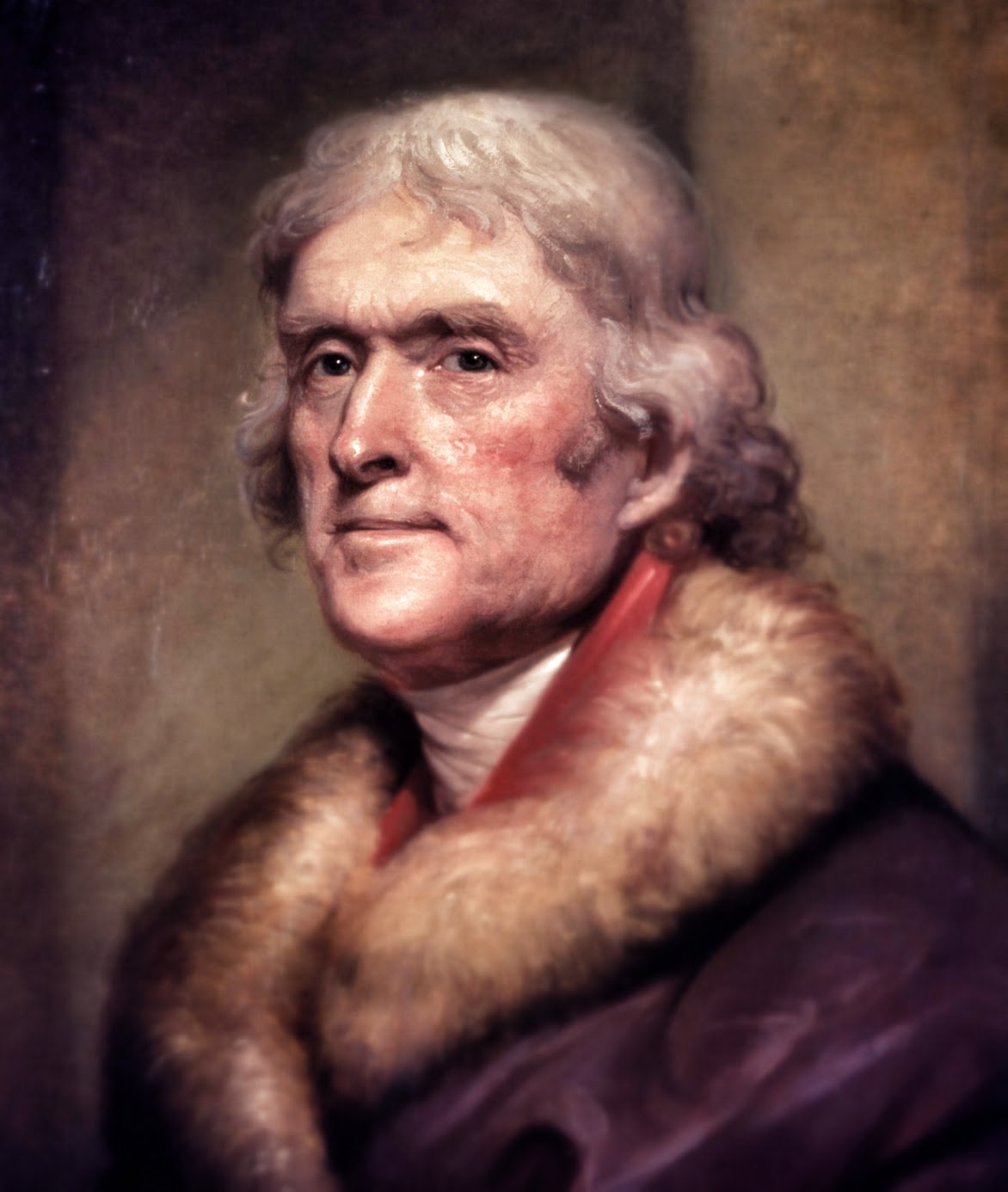
In fact, it was in the US congress that such a systemic problem was found and corrected by Thomas Jefferson. In the US, the Constitution has only limited guidance for parliamentary procedure – that being left to the standing rules and precedents established as presiding officers resolve parliamentary disputes. When the senate was created, the Constitution set the Vice President of the US as the president of the Senate and the senate rules provided that “every question of order stall be decided by the President, without debate.” This unchecked power of the presiding officer of the Senate gave him extraordinary power to shape and control the proceedings of the body. This arrangement troubled Thomas Jefferson who wrote:
“This places under the discretion of the President a very extensive field of decision, and one which, irregularly exercised, would have a powerful effect on the proceedings and determinations of the house. The President must feel, weightily and seriously, this confidence in his discretion; and the necessity of recurring, for its government, to some known system of rules, that he may neither leave himself free to indulge caprice or passion, nor open, to the imputation of them.”
(Manual of parliamentary practice, Thomas Jefferson, preface archive.org)
As a remedy to this situation, Jefferson set out to draw upon the parliamentary experience of the rules of Britain’s House of Commons and his own experience with the Continental Congress and create a Manual of Parliamentary Practice which could be used as a reference to guide procedure and which prevented the presiding officer from capricious abuse of power while enabling him to direct proceedings efficiently.

Jefferson’s work has had a significant impact on how the house, senate and state legislatures operate. Jefferson’s parliamentary rules are still used in part by the House of Representatives and his manual has a strong influence on how the Senate acts with order and decorum. While such rules have been modified and refined over time, the rationale for his endeavor is just as pertinent as it ever was – to put a check on the power of a presiding officer.
Defective Rules
You see, parliamentary rules only protect rights and ensure equitable deliberation if they respect the notions of justice and equality and are designed with checks on abuses of power. There can be rules which do not serve this function but actually enable abuse. Thomas Jefferson further alluded to this misapplication of parliamentary procedure when he wrote, in the preface to the original US Parliamentary rules that
“The proceedings of Parliament in ancient times, and for along while, were crude, multiform, and embarrassing.” (Manual of parliamentary practice, Thomas Jefferson, preface archive.org)
Let’s imagine what some defective rules might be which serve to simply ensure the unchallenged power of the autocrat. The effect of such rules is that the will of the presiding officer is under no threat of being undermined or over-ridden. We will refer to the autocrat as the “Chairman”:
[stextbox id=”alert” bgcolor=”FFF1F0″ bgcolorto=”FFE1D6″ image=”null”]
- The Chairman is not elected by the body or any other democratic process, but predetermined or held by nature of some external claim to authority.
- The Chairman gets to set the agenda of what is to be debated and decided upon. No questions can be considered if the chairman does not approve of it being brought up in the first place.
- The Chairman gets to submit the first vote on any question, and all subsequent votes must concur with the Chairman – if any votes differ from the Chairman’s, then that individual must change their vote or be removed from the body.
- Once a vote is passed, no criticism or amendment to the vote can be voiced or raised by any member.
- New members can only be admitted if proposed by the chairman and then unanimously agreed upon.
- The rules cannot be changed by the body. All new members must agree to the rules or they are not admitted to the body.
- New members must swear an oath on penalty of death not to disclose any aspect of the body or proceedings to outsiders.
[/stextbox]
Any of these rules in isolation may not be absolutely bad, but all of them together serve to provide an ironclad entrenchment of the power of the Chairman. To demonstrate how this works, let’s see what happens in the deliberation of some example issues:

Let’s suppose that it has been discovered that some program favored by the Chairman has been discovered to be riddled with waste, fraud and abuse. A body member brings that issue to the attention of the Chairman, but since it is not in alignment with the Chairman’s perspective – he chooses not to bring it before the body.
Next, suppose that there is a decision to be made about a new building development. The Chairman has an interest in a particular company receiving the assignment of construction. They enter a proposal to grant the favored company the project. The Chairman casts the first vote in favor, as per procedure. Each subsequent vote is also in favor, until one member of the body chooses to dissent. He is given a chance to explain his dissenting vote, and then the Chairman and other members respond by giving him reasons to support the proposal. The dissenting member does not change his vote. As a result, following the rules he is removed from the body and the voting continues until all votes are cast in favor. The minutes record that the vote was passed unanimously.
Next let’s suppose that a member of the council is found out of favor of the chairman based on interactions outside of their deliberative meetings. At the council, the chairman proposes to remove that member from the body. All votes are in the affirmative, excepting the member – who is summarily dismissed in either event.

Finally, suppose that the Chairman proposes to commit to an act which was previously considered illegal. The Chairman makes the case that based on their higher authority, they are able to supersede other laws and the supporting vote of the body will make that act legal according to his higher law. The vote commences with the Chairman in favor and all subsequent votes are in support – excepting any dissenters which are dismissed from the body as previously described. The vote is unanimous.
It may be that the Chairman encourages the members of the council to voice any dissenting opinion without fear of reprisal, the fact that all votes must be unanimous, or else dissenting members must withdraw makes this a moot point – members that persist in opposing the chairman will lose their place in the body.
Can you see how this type of body is set up as a sham meant only to consolidate the power of the chairman with an artifice resembling a deliberative council? With such unchecked power in the hands of the Chairman, the incentive of all the members of the body is to curry favor with the chairman and fawn like lap dogs at his feet. Whether such a system is employed in government, business, social club or any other body – it is a total sham with the sole effect of absolute tyranny in the sphere of it’s operations.

But what does this have to do with Mormonism?
The Council of Fifty
The Joseph Smith Papers Project describes the Council of Fifty as “An organization intended to establish the political kingdom of God on the earth.” ((Council of Fifty entry at JosephSmithPapers.org)). Joseph first revealed the full name of this council in an unpublished revelation of 7 April 1842 as “The Kingdom of God and His Laws with the Keys and Power thereof, and Judgment in the Hands of His Servants, Ahman Christ” and shortly thereafter, Joseph began to outline the idea that it was God’s purpose to take control of the governments of the world with his servants (i.e. himself) administering them. He wrote in the church periodical Times and Seasons:
“It has been the design of Jehovah, from the commencement of the world, and his purpose now, to regulate the affairs of the world in his own time; to stand as head of the universe, and take the reins of government into his own hand“
(“The Government of God,” Times and Seasons Vol 3, pg 856 archive.org)

This was necessary, according to Joseph, because the ancient and new governments of the world formed by men “all speak with a voice of thunder, that man is not able to govern himself – to legislate for himself – to protect himself – to promote his own good, nor the good of the world.” ((“The Government of God,” Times and Seasons Vol 3, pg 856 archive.org)) Joseph then held up the examples of Enoch, Abraham, Moses and Joseph of Egypt as times when God, through his servants, held the reins of government. In describing this desirable arrangement, Joseph stated:
“The government was a theocracy; they had God to make their laws, and men chosen by Him to administer them. . . . [They were led] in both civil and ecclesiastical affairs. … So will it be when the purposes of God shall be accomplished: when “The Lord shall be King over the whole earth” and “Jerusalem His throne.” “The law shall go forth from Zion, and the word of the Lord from Jerusalem .”
(“The Government of God,” Times and Seasons Vol 3, pg 857 archive.org)
Mormons understand that their religion is a restorationist one – where all of the ancient orders of God’s purposes would be restored. Joseph unambiguously declared that this theocracy was essential to that restoration, stating that “This is the only thing that can bring about the “restitution of all things, spoken of by all the holy prophets since the world was” – “the dispensation of the fullness of times, when GOD shall gather together all things in one.” ((“The Government of God,” Times and Seasons Vol 3, pg 857 archive.org))
The council was formally organized in March of 1844 and in addition to its longer formal name was also referred to as the “Council of Fifty”, the “Living Constitution” or the “Kingdom of God”. The council was composed of both members and non-members, mindful of the broad scope of its charter to establish a theocratic government over the wide world, Mormon and non-Mormon alike. It was in this council that Joseph was elevated to the title of “Prophet, Priest and King” as cryptically recorded in William Clayton’s journal:
“… Afterwards in the council. We had a glorious interview. Pres J. was voted our P. P. and K. with loud hosannas.”
(Entry for 11 April, 1844, Journal of William Clayton, archive.org, also in entry for “Council of Fifty” at JosephSmithPapers.org)
The threefold office of “Prophet, Priest and King” is one which has traditionally been reserved for Jesus Christ, and so it is not surprising that some people were alarmed at discovering Joseph’s new title and his plans at theocracy – it was one of the main complaints of the Nauvoo Expositor.

Theodemocracy
Pursuant to the goal of theocracy, Joseph’s 1844 Presidential Campaign was planned and initiated in the Council of Fifty. It was in this campaign that Joseph articulated the concept of “theodemocracy” – at one point publishing this statement under his name:
“As the “world is governed too much” and as there is not a nation or dynasty, now occupying the earth, which acknowledges Almighty God as their law giver, and as “crowns won by blood, by blood must be maintained,” I go emphatically, virtuously, and humanely, for a THEODEMOCRACY, where God and the people hold the power to conduct the affairs of men in righteousness. And where liberty, free trade, and sailor’s rights, and the protection of life and property shall be maintained inviolate, for thebenefit of ALL. To exalt mankind is nobly acting the part of a God; to degrade them, is meanly doing the drudgery of the devil. Unitas, libertas, caritas esto perpetua! [Unity, liberty, charity in perpetuity!] With the highest sentiments of regard for all men, I am an advocate of unadulterated freedom. JOSEPH SMITH”
(Response to The Globe, 15 April 1844, Times and Seasons, Vol 5, Pg. 510, archive.org)
This mix of seemingly incompatible theories of government seemed to resolve the western aversion to pure theocracy – with its corruption, abuses, and violence – by tempering it with the democratic notions of natural rights of life, liberty and property. Joseph equated God’s rule with “unadulterated freedom” asserting that the former would naturally result in the latter. He proposed a government with God (and his servants) at the head which would deliver peace, unity and liberty where other nations had only delivered violence and oppression.
The residents of Nauvoo already had somewhat of a taste of what a unification of religious and civil authority would look like, since Joseph Smith was not only Prophet and President of the Church but also Mayor of the City, registrar of deeds ((JosephSmithPapers.org)), commander of the militia with a rank of Lt. General, major newspaper editor, and Chief Justice ((“Joseph Smith Chief Justice And Mayor Of Nauvoo” lds.org)). In this arrangement, those offices were separate and under various individual spheres of influence, with different authorities and procedures respectively. The goal of the Council of Fifty was a unification of the religious and civil.
The Rules of the Kingdom
While the council was in embryo, the forms of parliamentary procedure upon which that body would operate had been given. The council was the form of the Kingdom of God on earth. Its procedures, then, were the shape of Godly Government. Its rules, the rules of God’s Kingdom.
Faithful LDS author and historian Andrew Ehat is one of just a handful of individuals who have ever been given access to the typescript minutes of the Nauvoo era Council of Fifty minutes. The information collected by Ehat and D. Michael Quinn is the best to date that we have about the proceedings of the council.

In a remarkable article entitled “It seems like Heaven began on earth: Joseph Smith and the Constitution of the Kingdom of God” published in 1980 in BYU Studies, Ehat describes the parliamentary rules that governed the council:
“This brief constitution may imply that the Council operated in loose and chaotic fashion. However, order in the Council was assured by certain parliamentary procedures that were also finalized in the 18 April 1844 meeting. Given the unwritten nature of the Constitution of the Kingdom, these parliamentary procedures consequently take on constitutional proportions.”
(“It Seems Like Heaven Began on Earth…” Ehat, BYU Studies, Vol 20, No 3 (1980), pg. 260 archive.org)
Ehat then proceeds to list “a compilation of descriptive statements of the rules of order scattered throughout the minutes of the Council of Fifty” and from those we can observe the nature of those rules. Will they reflect the internal guards against abuse of power that Jefferson felt were necessary or would they have a different effect in practice? Let’s take a look:
THE RULES OF THE KINGDOM
1. The council is convened and organized by the president of the church subject to the rules of the kingdom of god he is elected standing chairman upon convening of the council.
2. Members of the council sit according to age except the chairman.
3. According to the order of voting in the council a recorder and a clerk of the kingdom are elected. The clerk takes the minutes of the meeting and the recorder enters the approved minutes into the official records of the kingdom. They are voting members though they do not occupy a seat in the circle.
4. All motions are presented to the council by or through the standing chairman. All motions must be submitted in writing.
5. To pass a motion must be unanimous in the affirmative. Voting is done after the ancient order: each person voting in turn from the oldest to the youngest member of the council, commencing with the standing chairman. If any council member has any objections he is under covenant to fully and freely make them known to the council. But if he cannot be convinced of the rightness of the course pursued by the council he must either yield or withdraw membership in the council. Thus a man will lose his place in the council if he refuses to act in accordance with righteous principles in the deliberations of the council. After action is taken and a motion accepted, no fault will be found or change sought for in regard to the motion.
6. Before a man can be accepted as a member of the council his name must be presented to the members and voted upon unanimously in the affirmative. When invited into the council he must covenant by uplifted hand to maintain all things of the council inviolate agreeable to the order of the council. Before he accepts his seat he must also agree to accept the name, constitution and rules of order and conduct of the council.
7. No member is to be absent from any meeting unless sick or on council business. If this were not the case, rule five could be invoked to invalidate any action of the council.
8. A member can be assigned to only one committee of the council at a time.
9. Adjournment and specific date of reconvening the council are determined by vote the council may be called together sooner at the discretion of the chairman. If the council adjourns without a specific meeting date (sine die) it next meets only at the call of the standing chairman or new president of the church if applicable.
(“It Seems Like Heaven Began on Earth…” Ehat, BYU Studies, Vol 20, No 3 (1980), pg. 260-261 archive.org)
Now, if you are reading carefully, you will notice that the hypothetical defective rules that we examined previously were, in fact, simply a restatement of “The Rules of the Kingdom” as outlined in the Minutes of the Council of Fifty. In particular, item #5 contains some of the most egregious notions – the commencement of voting with the chairman, the requirement of unanimity, and the injunction of a member to yield or withdraw from the council.
We previously demonstrated by various examples above, that the basest form of corruption, conflict of interest, deception and reprisal are facilitated by such a set of rules. This constellation of rules simply has the effect of making the council an impotent extension of the will of the Chairman, who is also the head of the church. It is pure autocratic theocracy with only the thinnest meaningless veneer of republicanism or democracy. It functions with no more effect than a council of subservient advisors subject to the whims of a monarch whose only claim to legitimacy is divine right. An examination of the details of the workings of the council reveal that if such rules are a model for the Kingdom of God, then the idea of “theodemocracy” is nothing more than a quasi-palatable deceptive rebranding of unmitigated theocratic despotism.
Conclusion
James Madison, considered to be the father of the constitution, argued for the necessity of checks and balances on power in government in Federalist No. 51 stating:
“But what is government itself, but the greatest of all reflections on human nature? If men were angels, no government would be necessary. If angels were to govern men, neither external nor internal controls on government would be necessary. In framing a government which is to be administered by men over men, the great difficulty lies in this: you must first enable the government to control the governed; and in the next place oblige it to control itself.”
(The Federalist No 51, Constitution.org)
Madison and Jefferson both saw that ambition and the tendency to abuse power was an unavoidable aspect of any government composed of men. As such, the framework of rules upon which the government operated of necessity should contain checks and balances on those powers. This is true both between the major branches of government, as articulated by the constitution, as well as within the operation of the smaller bodies that constitute those branches, as set forth in the house and senate parliamentary rules.
How do you think Madison or Jefferson would view the Rules of the Kingdom of God? Faithful defenders of Joseph might respond “But we know that God would be at the head of the Kingdom!”. The difficulty is in realizing that God is at the head of the LDS church, with his servants the prophets and apostles administering it just as the Council of Fifty theocracy is arranged. The church today frequently reminds the members that church leaders are simply men that are subject to human error. They must also, then, be subject to ambition, abuse of power, vanity and any other vice which afflicts men in power.

It is always men sitting in seats of self-proclaimed authority who tell the rest of us exactly what God is saying – and yet the prophets have been wrong about major doctrinal points including Blood Atonement, Adam-God teachings, and Racial Equality. It is enough to make one wonder if those men are really in communication with God at all – certainly they are not angels. They do not claim to be. If they are not angels, then, they should operate in a framework that includes check and balances, transparency and accountability. These concepts are completely absent in the Rules of the Kingdom and that is enough to make us leary of the idea that God would compose such a system.
It is just one more step back to realize that the church shouldn’t operate without such safeguards either.
One More Thing
There is one item in our first list of defective rules that we did not see in Ehat’s exposition. It is item #7
“New members must swear an oath on penalty of death not to disclose any aspect of the body or proceedings to outsiders.”
Why did I include this when it doesn’t appear to have anything to do with the Council of Fifty? Well… That is not exactly true. It actually has a great deal to do with the Council of Fifty as Joseph established it in Nauvoo. How do I know? Well, in the spirit of the new openness of the Church Historical archives, they have made several journals of General Authorities available for public review. One of these is that of Joseph F Smith. The entry for 12 October 1880 contains the important information:

Wait… what is that big black box? Why is this entry redacted? What could possibly be so secret or sacred that the church would have to hide it from the public? Perhaps it was some confession of sin by a member, which would require redaction for the purpose of confidentiality – that is the reason the church has given for restricting access to certain resources in the past.
It is very fortunate that we have another way of reading this journal. Historian D. Michael Quinn had access to this journal during his time working in the Church History Department and a transcription of the journal is found among his papers at Yale. The entry for 12 October, which is redacted on the church website, reads as follows:
Oct[ober] 12th 1880—10 a.m. Council of L met—John Van Cott was voted in as a member—also Lorin Farr. Unanimous. Were instructed by Geo[rge] Q. Cannon[,] after affirming that they were in fellowship with every other person in the room[,] giving them the “Charge,” “The name,” & “Key word,” and the “Constitution,” and “Penalty.” The penalty was objected to by Jos[eph] Young. He said it was first suggested by the “Pagan Prophet”—but was not sanctioned by Joseph [Smith] the Prophet. F[ranklin] D. R[ichards] moved that we proceed to test the fellowship of each with each other. Bros. F. D. R[ichards], Jos. Young, C[harles] C. Rich, W[ilford] Woodruff, spoke to the question—the two latter sustained the “penalty.” Geo. Q. Cannon, read the minutes of the 1st organization which did sanction the “penalty.”Pres. [John] Taylor expressed his views which were liberal, so also did several others.
(Joseph F. Smith diary, 12 Oct 1880, original redacted at lds.org, typed extract in Quinn Papers)
This demands some explanation. This entry recounts the events of a meeting of the Council of Fifty in 1880 where a new member was being inducted. Part of the induction ceremony included giving the new member certain oaths, charges, names and the member accepting a penalty… understood to mean that, like the penalties administered in the Masonic ritual and LDS Temple endowment ritual (see the post on Purloined Penalties), newly inducted members of the Council of Fifty also swore that they would hold the proceedings of the council secret or else be subject to death by certain means.
This journal entry states that when it came to the penalty, council member Joseph Young objected to it’s inclusion – asserting that it was not an original aspect of the council and likely a later introduction by the Pagan Prophet (Lucien Woodworth). To answer the question, after some discussion, the minutes of the very first meeting of the council were consulted and they “sanctioned the penalty.”
This confirmed that members of the Council of Fifty swore an oath under penalty of death that they would not disclose the proceedings of the council. So we see that the church has specifically hidden this aspect of the Council of Fifty from the public.
The church announced in 2013 that they intended to end the historical restriction on access to the Nauvoo Council of Fifty minutes by publishing them as part of the Joseph Smith Papers project at some point in the future. We are still waiting. It will be enlightening to see if the Penalty and the Rules of the Kingdom as described here are confirmed on direct inspection. They have been kept restricted for a reason. If history is any indication, these points will be legitimized and many more revelations about Joseph’s designs and activities will be forthcoming.
I can’t wait.

Some sloppy thinking apparent here, I’m afraid, which I may take up in my own forums as time permits.
You are welcome to explain any sloppy thinking here.
That would mean you would respond to the criticism where all your readers could see, Thinker. Simply unacceptable. /sarcasm
Christ is the only leader we need or can trust. For what so called ‘prophets’ or ‘servants of God’ have ever proven to be true & trustworthy disciples of Christ and kept all of his commandments like Christ said true prophets would and must. Christ made it easy for us to tell true prophets/disciples/servants from false ones. And thus it seems very few, if anyone, has ever been able to pass Christ’s test of a true disciple or prophet.